For orders up to 3k, a 50% advance payment is required for order confirmation.

For orders up to 3k, a 50% advance payment is required for order confirmation.
Within Lahore PKR 250–600 (area-wise) | Out of Lahore PKR 400 (0–3 kg) | Above 3 kg +PKR 130/kg
Food Delivery Packaging: How to Prevent Spills & Damage
- Hamza
- No Comments
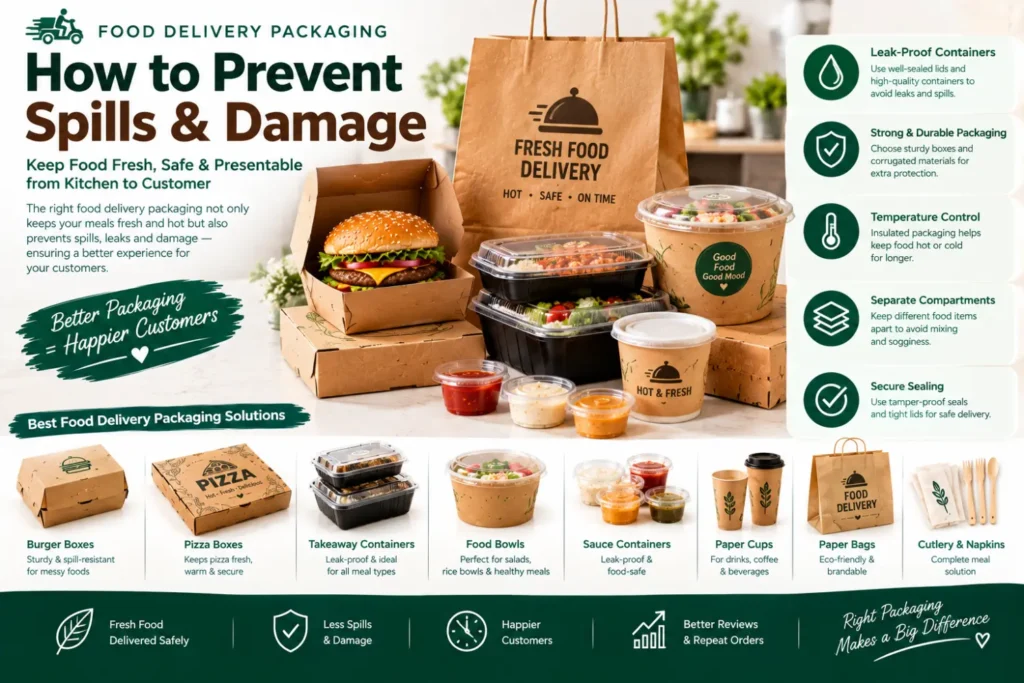
Spills and damage during food delivery almost always come from the same few causes. A loose lid. A container too big or too small for the food. No cushioning for fragile items. Weak sealing on sauces and liquids. Fixing these doesn’t need exotic packaging. It needs the right product matched correctly to the right food.
Delivery apps have changed how restaurants get judged. A customer never sees the kitchen. They only see the order when it arrives. A leaked sauce or a crushed burger shapes the whole impression, even if the food itself was perfect when it left the restaurant.
This guide breaks down where spills and damage actually come from, and which packaging choices fix each one.
Where Spills Actually Come From
Weak or Mismatched Lids
A lid that doesn’t seal properly is the single biggest cause of delivery spills. This matters most for liquids and sauces. Dip sauce containers built with a secure, leak-proof lid solve this directly. For drinks, a disposable glass with a dome lid keeps juices, shakes, and iced coffee sealed during transport.
Containers That Don’t Match the Food
Too much empty space lets food shift and spill. Too little space pushes sauce and liquid against the lid under pressure. Matching container size to portion size fixes both problems at once.
Grease and Moisture Soaking Through
Thin or low-quality material lets oil and sauce soak through the packaging itself. This is what causes a bag to feel wet and heavy by the time it arrives. Kraft trays are built specifically to resist this, even with hot and oily food.
No Barrier for Hot, Wet Food
Rice, curry, and saucy sides need packaging that won’t buckle or leak under heat and moisture. Aluminium foil containers handle this well, since the material itself is both heat-resistant and leak-resistant.
Where Damage Actually Comes From
No Structural Support
A burger, shawarma, or wrap needs a box strong enough to hold its shape under light pressure. Thin or undersized packaging crushes easily in a delivery bag. Burger boxes and shawarma boxes are built with this specifically in mind.
Stacking Without Protection
Delivery riders often stack multiple orders together. A soft or flexible container at the bottom of a stack gets crushed. Rigid-walled packaging protects better here than flexible wraps or thin trays.
Heat-Sensitive Items With No Shelf-Stable Option
Some food needs a genuinely sealed, shelf-stable format rather than a standard container. Seal retort pouches are built for exactly this. They’re sealed under heat and hold their structure without refrigeration.
A Quick Matching Guide
| Food Type | Main Risk | Packaging That Solves It |
|---|---|---|
| Sauces, dips, condiments | Leaking lids | Dip sauce containers |
| Drinks, shakes, iced coffee | Spilling during transport | Disposable glass with dome lid |
| Rice, curry, saucy sides | Soaking through, leaking | Aluminium foil containers |
| Burgers, shawarma, wraps | Crushing, losing shape | Burger boxes, shawarma boxes |
| Fries, oily snacks | Grease soaking through | Kraft trays |
| Ready-to-eat meals needing shelf stability | Spoilage, poor sealing | Seal retort pouches |
Packing the Full Order, Not Just One Item
Most delivery orders combine several of these risks at once. A meal with a main item, a side, and a sauce needs all three packaging choices working together, not just the main box. A few practical habits help:
- Seal sauces separately from the main item. Never rely on one container to hold both.
- Leave a little headroom, not a lot. Slightly loose is safer than completely full, but too much empty space causes shifting.
- Use rigid packaging for anything going into a stacked delivery bag. Soft wraps and thin trays don’t hold up under weight.
- Match lid type to contents. A flat lid works for solid food. A dome lid is needed for anything with height or topping.
For a broader look at how all your fast food packaging fits together, our French fries box guide covers grease-resistant packaging in more depth. For general supplier vetting, our guide to choosing a packaging supplier in Pakistan covers what to check before a bulk order.
FAQs
What causes most food delivery spills?
Weak or poorly fitted lids cause most spills. This is especially true for sauces and drinks. A secure, leak-proof lid matched to the container size fixes the majority of delivery spill complaints.
How do I stop grease from soaking through packaging?
Use material built to resist it. Kraft trays and properly coated boxes are designed specifically for oily and hot food. Thin, low-quality paper is the most common cause of grease soaking through.
What packaging prevents burgers from getting crushed in delivery?
A rigid, properly sized burger box prevents most crushing damage. The box needs to hold its shape under light stacking pressure, which thin or flexible wraps can’t do.
Should sauces always be packed separately from the main food?
Yes. Packing sauce inside the same container as the main item is one of the most common causes of delivery spills. A separate, sealed dip sauce container keeps both the food and the packaging itself clean.
Do I need different packaging for every menu item?
Not every item, but different food types do need different solutions. A single generic container almost always underperforms for at least one food type on a varied menu, compared to packaging matched to that specific item.
Related Posts:
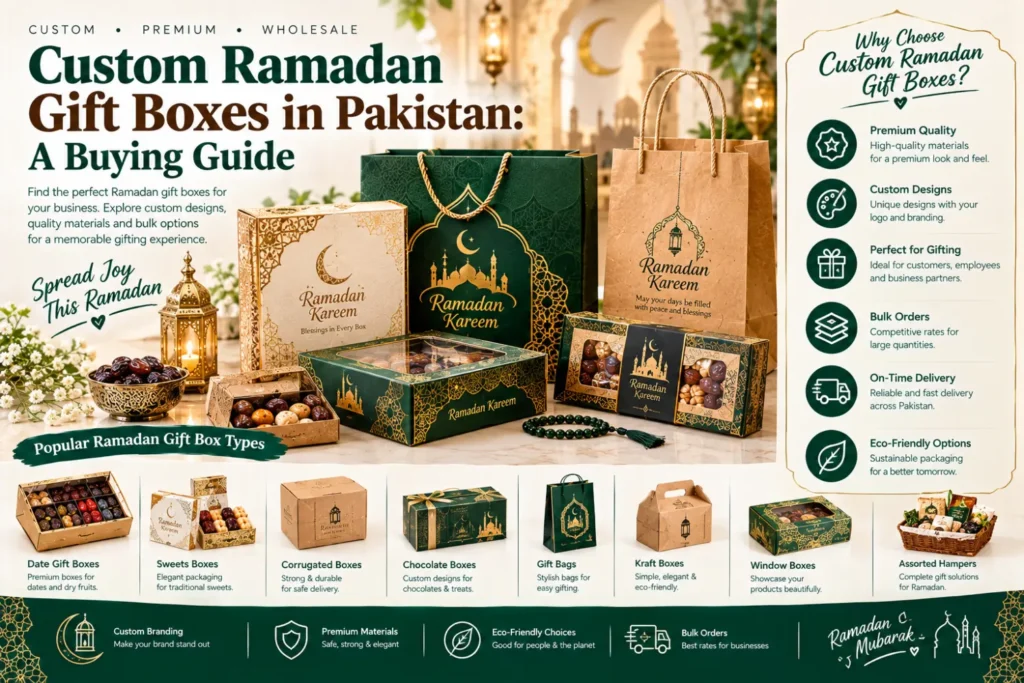
Custom Ramadan Gift Boxes in Pakistan: A Buying Guide
October 5, 2026
No Comments
A Ramadan gift box is only as good as the box itself. The contents matter,
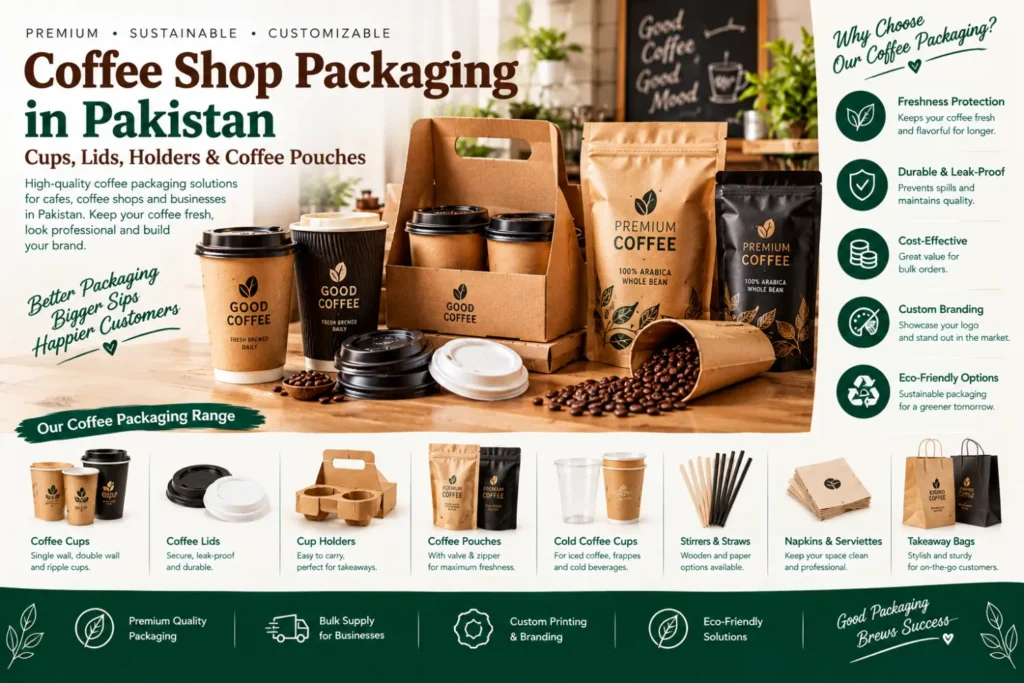
Coffee Shop Packaging in Pakistan: Cups, Lids, Holders & Coffee Pouches
October 4, 2026
No Comments
A coffee shop needs two very different kinds of packaging. One for drinks served to
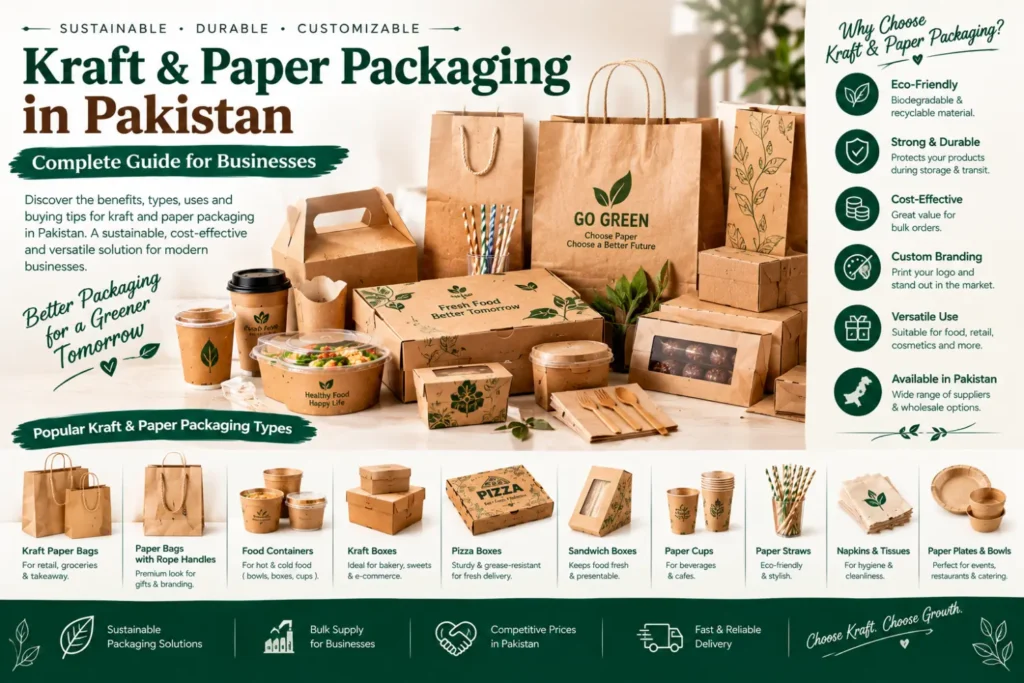
Kraft & Paper Packaging in Pakistan: Complete Guide for Businesses
October 3, 2026
No Comments
Kraft and paper packaging covers more ground than most businesses realize. Boxes. Bags. Trays. Wraps.
FEEL FREE CONTACT US
info@packaigngmaster.pk
923153127889
Packaging Master, serving Pakistan since 2020, specializes in premium disposable packaging boxes, food packaging, e-commerce cartons, kraft items, and fully customized solutions. Trusted by restaurants, SMEs, retail stores, and online sellers, we deliver durable, eco-friendly packaging with fast nationwide delivery and competitive pricing—making us a leading choice for reliable, high-quality packaging in Pakistan.
Company
Products
Contact Detail
- Rafi Group Landmark Plaza LG 60,61 Jail Road, Lahore
- Phone: +923153127889
- Email: info@packagingmaster.pk
© 2026 Packaging Master. All Rights Reserved.