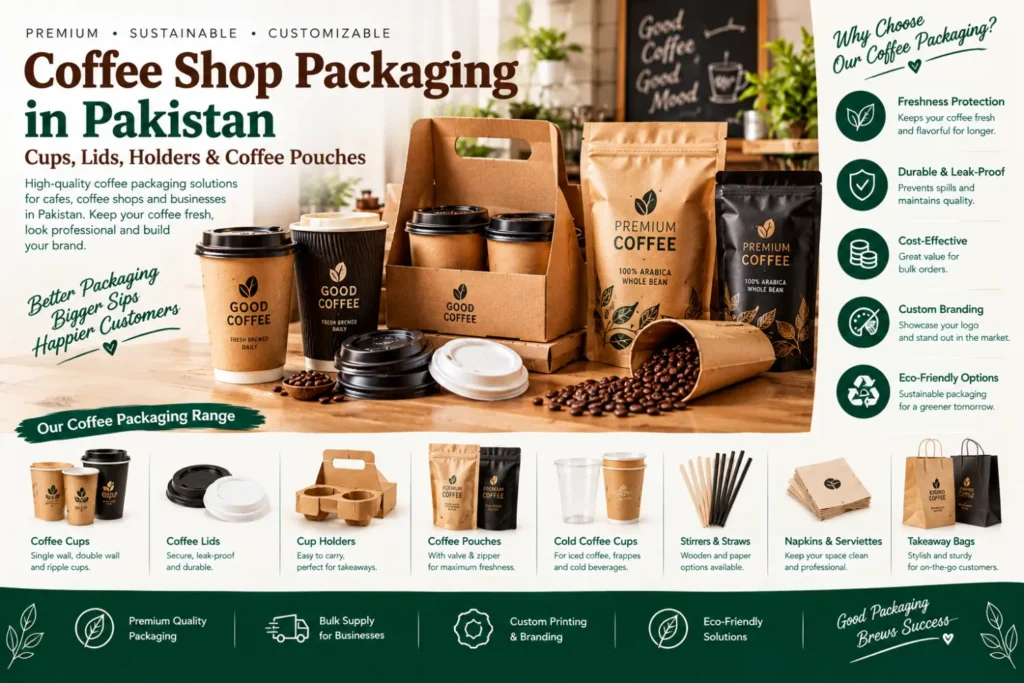
A coffee shop needs two very different kinds of packaging. One for drinks served to customers. One for beans and grounds sold as a product. Cups and lids handle the first job. Coffee pouches handle the second. Most cafés in Pakistan need both, and each one has its own set of choices worth getting right.
This guide covers the full set. What cup type fits which drink. How lids pair with cups. What a coffee bag actually needs to keep beans fresh. And where a café’s packaging needs change once it starts selling beans alongside brewed coffee.
Cups: Matching Type to Drink
Single wall coffee cups are the budget option. Lightweight. Lower insulation. Best for quick-service coffee and tea where cost per cup matters most.
Double wall coffee cups add a second layer with a trapped air gap. Better heat retention. Comfortable to hold without a sleeve. A solid middle ground for lattes and cappuccinos.
Ripple coffee cups go a step further. The ridged outer layer traps air across the whole surface, not just one sealed gap. Strong grip. Premium feel. Common for specialty coffee shops building a distinct brand identity.
Our full comparison of single wall, double wall, and ripple cups breaks down sizing and pricing across the full range.
Lids: Matching Type to Cup
Hot drinks need a flat, sip-through lid. Cold drinks, especially anything topped with foam or whipped cream, need a dome lid with clearance above the rim. For iced coffee and cold beverages specifically, disposable injection glasses pair well with a flat or dome lid depending on the drink.
Always confirm lid size against cup diameter, not just the size label. A lid from one supplier isn’t guaranteed to fit a cup from another.
Coffee Bags: A Different Problem Entirely
Selling roasted beans or ground coffee needs packaging built for freshness, not drink service. Kraft stand-up pouches are the standard format. Food-grade. Available with a one-way degassing valve, which matters specifically for freshly roasted beans.
Fresh coffee releases CO2 for days after roasting. A sealed bag without a valve can bulge or even burst. A valve lets gas escape without letting oxygen back in, which keeps the coffee fresh for longer.
Clear zipper stand-up pouches are a lighter-duty option. Better for ground coffee or retail display where visibility matters more than maximum freshness protection.
What a Growing Café Actually Needs
A café selling only brewed drinks needs cups, lids, and napkins. A café that starts selling bagged beans or ground coffee alongside drinks needs to add pouches to that list, usually with a valve if beans are roasted in-house or sold fresh.
This shift often happens gradually. A small retail shelf by the register. A few bags sold to regulars. It’s worth planning packaging for this step before it happens, not after a customer asks and there’s nothing ready to sell it in.
What to Check When Sourcing in Bulk
- Confirm lid and cup compatibility before ordering either separately.
- Ask about valve inclusion on coffee pouches if you roast or sell fresh beans.
- Request samples for both cups and pouches before a full bulk order.
- Check food-grade certification across every format.
- Compare cost per unit, not per case, since case sizes vary by supplier.
FAQs
What’s the difference between double wall and ripple coffee cups?
Double wall cups use two smooth layers with a sealed air gap between them. Ripple cups use a textured outer layer that traps air across the whole surface. Both insulate well. Ripple generally gives a stronger grip and a more premium feel, at a higher cost per cup.
Do coffee bags need a valve?
Only if the coffee is freshly roasted. Fresh beans release CO2 for days after roasting, and a sealed bag without a valve can bulge or burst. Pre-ground or shelf-stable coffee doesn’t need this feature.
What size coffee cup is best for a latte or cappuccino?
8oz typically suits a cappuccino or small latte. 12oz suits a medium latte or Americano. Espresso-only drinks are better served in smaller 4-6oz cups.
Can one supplier provide both cups and coffee pouches?
Yes, and it’s generally the easier option. Sourcing both from one supplier reduces the risk of sizing or fit mismatches, and simplifies reordering as a café’s product range grows.
Is it cheaper to buy coffee shop packaging in bulk?
Yes. Buying cups, lids, and pouches in bulk from a wholesale supplier is generally more cost-effective per unit than smaller retail-style orders, especially once order volume covers both drink service and retail bean sales.