For orders up to 3k, a 50% advance payment is required for order confirmation.

For orders up to 3k, a 50% advance payment is required for order confirmation.
Within Lahore PKR 250–600 (area-wise) | Out of Lahore PKR 400 (0–3 kg) | Above 3 kg +PKR 130/kg
How to Pack Coffee Beans for Retail Sale
- Hamza
- No Comments
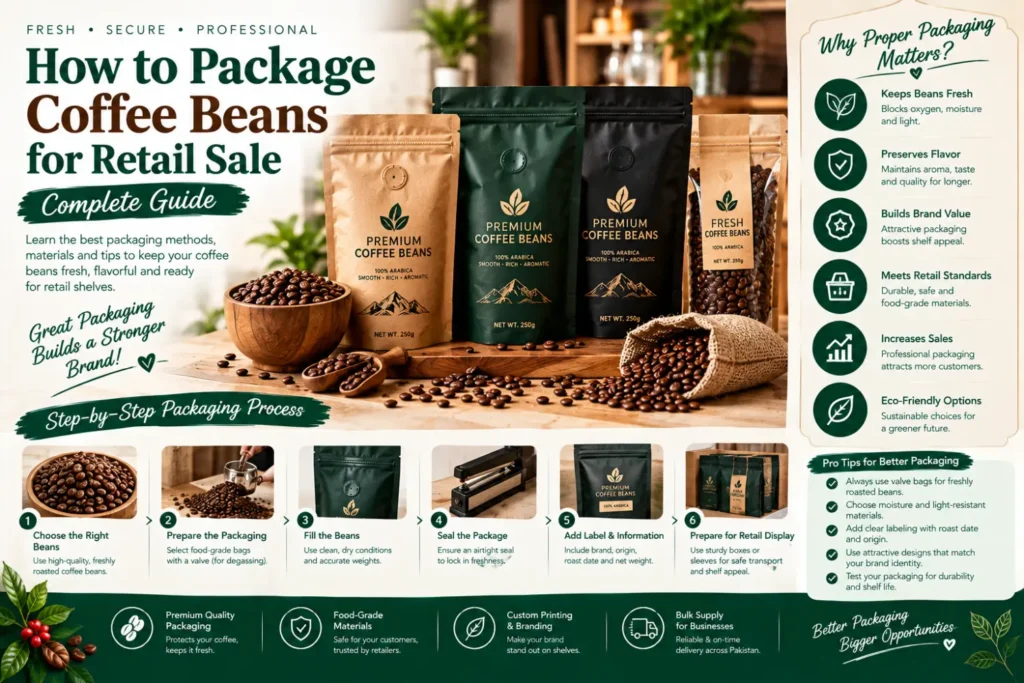
To package coffee beans for retail sale, let the beans degas, fill a barrier-lined stand-up pouch that has a one-way valve and a zipper, remove excess air, heat seal the top, and label the bag with the roast date. Then store it somewhere cool, dry, and dark. These steps protect flavor, stop bags from puffing, and give your shelf a professional look.
Why Packaging Matters So Much for Coffee
Roasted coffee is fragile. It starts losing aroma the moment it meets air. Moisture dulls flavor. Light and heat speed up staling.
Good packaging does three jobs. It protects flavor. It tells the customer what they are buying. It makes your brand look trustworthy on a crowded shelf.
This matters even more in warm cities like Lahore, Karachi, and Islamabad. Summer heat and humidity shorten freshness quickly. A weak bag shows up as flat-tasting coffee and lost repeat customers.
Step 1: Roast and Cool the Beans Fully
Never pack warm beans. Trapped heat creates moisture inside the bag. Moisture hurts flavor and shortens shelf life.
Let the beans cool to room temperature first. Then move to the next step.
Step 2: Let the Beans Degas
Freshly roasted beans release carbon dioxide (CO2). This is called degassing. It is strongest in the first few days. It can continue for a week or two. Darker roasts often degas faster than lighter ones.
You have two options:
- Pack into a valve bag soon after roasting. The one-way valve releases the gas while keeping oxygen out.
- Rest the beans first, then pack. This is the safer route if you use a bag without a valve. Sealed gas can make the bag swell or even split.
Rest time varies by roast, bean, and brewing method. Test your own roasts and note what works.
Step 3: Choose the Right Bag
The bag is the most important packaging decision. Check four things.
Barrier layers. Look for a laminate that blocks oxygen, moisture, and light. Foil-lined or metallized films do this best.
A one-way degassing valve. Essential for freshly roasted whole beans.
A resealable zipper. Customers open the bag many times. A zipper keeps the coffee fresh at home.
A stand-up shape. Stand-up pouches sit upright on shelves and give you a large print area for branding.
Kraft stand-up pouches are a popular choice for specialty roasters. The natural kraft look suits coffee. The inner lining does the protective work. Valve and zipper Coffee pouches versions are available in this range.
If you want customers to see the beans, clear zipper stand-up pouches work well for display. Clear film lets in more light, so these suit faster-selling stock rather than long shelf life.
Quick Comparison of Coffee Pouch Types
| Pouch Type | Freshness Protection | Look | Best For |
|---|---|---|---|
| Kraft stand-up with valve + zipper | High (with foil or barrier lining) | Natural, premium | Specialty whole bean, retail shelves |
| Clear / window zipper pouch | Medium (more light exposure) | Product visible | Fast-moving stock, ground coffee, samples |
| Flat-bottom pouch with valve | High | Boxy, upscale | Premium single-origin lines |
| Side-gusset bag | Medium to high | Classic | Larger volumes, cost-conscious roasters |
Step 4: Pick the Right Size
Choose the bag by coffee weight. Most retail roasters sell in three sizes.
| Bean Weight | Typical Use | Notes |
|---|---|---|
| 250 g | Entry size, gifts, trying a new origin | Most popular retail size |
| 500 g | Regular home drinkers | Good value positioning |
| 1 kg | Heavy users, small offices, cafés | Usually priced per kg for savings |
Bag dimensions differ between suppliers and depend on gusset depth. Bean density and roast level also change how much fits. Always fit-test a sample with your own beans before placing a bulk order.
Step 5: Fill, Remove Air, and Seal
Weigh each bag on a scale. Consistency builds trust.
Fill the bag and leave a little headspace at the top. Gently press out extra air. Do not squeeze so hard that you crush beans or block the valve.
Then seal in this order:
- Heat seal across the top. This gives a tamper-evident closure for retail.
- Keep the zipper below the seal. Customers tear off the top and use the zipper after.
- Check the valve. Make sure no label or sticker covers it.
For larger roasteries, nitrogen flushing and oxygen absorbers can extend shelf life further. Most small and mid-size roasters do well with a good barrier bag and a heat sealer.
Step 6: Label the Bag Properly
A clear label sells the coffee. It also protects you legally. Include:
- Roast date. Customers look for this first.
- Coffee name, origin, and producer or farm.
- Process and roast level.
- Tasting notes.
- Net weight.
- Brewing suggestion. A short line such as “great for filter or espresso.”
- Storage instructions. For example, “Store sealed in a cool, dry place.”
- Your brand, contact details, and barcode.
Check current food labeling rules that apply to your business before printing.
You can print directly on the pouch for a premium look. Or use stickers on plain kraft pouches while you test blends. Custom printing usually needs a higher minimum order, so many new roasters start with stickers.
Step 7: Store and Display Correctly
Keep packed coffee in a cool, dry place away from direct sunlight. Do not stack it near ovens, roasters, or windows.
On a shelf, rotate stock so older roasts sell first. Remove bags that pass your own freshness window. Fresh stock protects your reputation more than any discount does.
Common Packaging Mistakes to Avoid
- Packing beans without a valve and sealing them right after roasting.
- Using clear bags for slow-moving stock. Light shortens freshness.
- Choosing the wrong size. A half-empty bag looks cheap. An overfilled one will not seal.
- Skipping the roast date. Buyers treat it as a freshness promise.
- Ordering in bulk before testing. Always order a sample first.
- Mixing too many bag styles. A consistent look builds recognition.
Packaging for Cafés That Also Sell Beans
Many cafés start selling bagged beans next to the register. If that is you, you need two sets of packaging: pouches for beans, and cups for drinks. Our disposable coffee cups range covers single wall, double wall, and ripple cups. Sourcing both from one supplier keeps branding consistent.
For gift sets and subscription shipments, a sturdy outer carton helps. Kraft boxes work well for packing pouches together safely.
How to Choose a Packaging Supplier
At Packaging Master, the first thing new roasters ask is usually, “Which bag should I start with?” Our advice is simple. Order a small sample. Test it with your beans. Check the valve, the zipper, and the seal. Only then move to a bulk order.
For a wider checklist on vetting any supplier, read our guide to choosing a packaging supplier in Pakistan.
Ready to pack your coffee? Browse the kraft stand-up pouch range and request samples before your next roast.
FAQs
Do coffee bags need a valve?
Yes, if you pack freshly roasted whole beans. The one-way valve lets CO2 escape without letting oxygen in. Pre-ground or fully rested coffee can use a zipper-only pouch, though a valve still helps for freshness.
How long should beans rest before packaging?
It depends on the roast and bean. Many roasters rest beans for a day or more, while valve bags allow you to pack sooner. Without a valve, wait until most gas has escaped so the bag does not swell. Test your own roasts to find the right window.
What size bag should I use for 250 g, 500 g, and 1 kg of coffee?
Choose a bag labeled for that weight, then fit-test with your beans. Size varies with gusset depth, bean density, and roast level, so always test a sample before ordering in bulk.
Can I use clear bags for retail coffee?
Yes, but clear film lets in light and shortens freshness. It suits fast-selling stock and display samples. For longer shelf life, choose an opaque or foil-lined pouch.
What should I print on a coffee bag?
Include the roast date, coffee name and origin, process, roast level, tasting notes, net weight, brewing suggestion, storage advice, and your brand and contact details.
How do I keep coffee fresh after opening the bag?
Reseal the zipper, squeeze out extra air, and store the bag in a cool, dry, dark place. Avoid the fridge and freezer for everyday use, since moisture can build up.
Is it cheaper to buy coffee pouches in bulk?
Yes. Per-unit cost drops as order quantity rises. Custom printing usually needs a higher minimum order than plain stock pouches.
Related Posts:
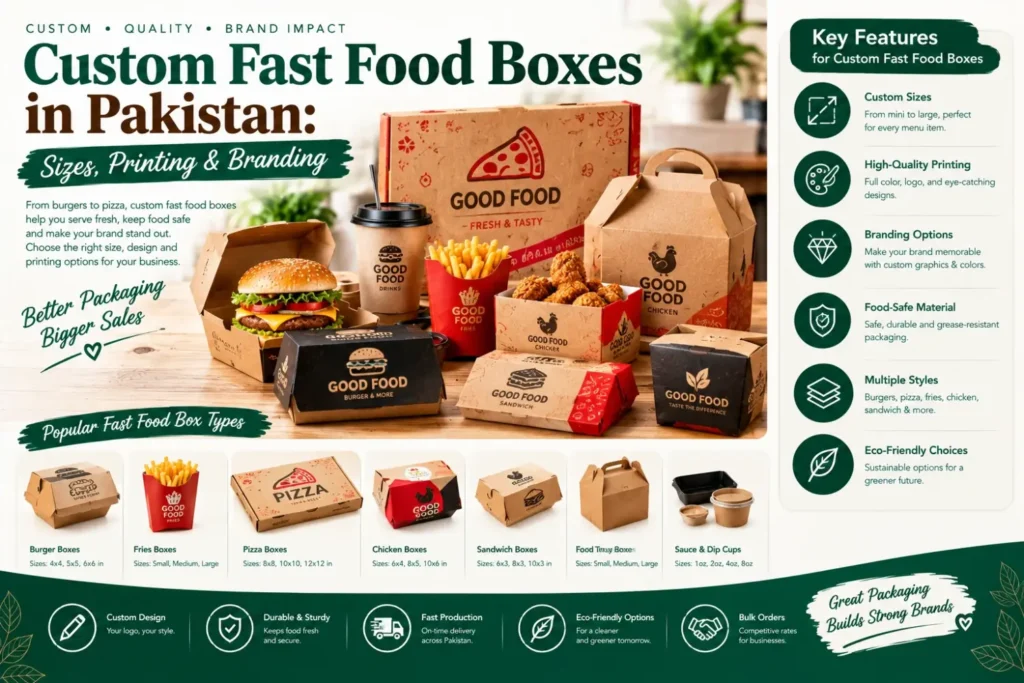
Custom Fast Food Boxes in Pakistan: Sizes, Printing & Branding
October 26, 2026
No Comments
Custom fast food boxes are food-grade boxes made to your size, material and print design.
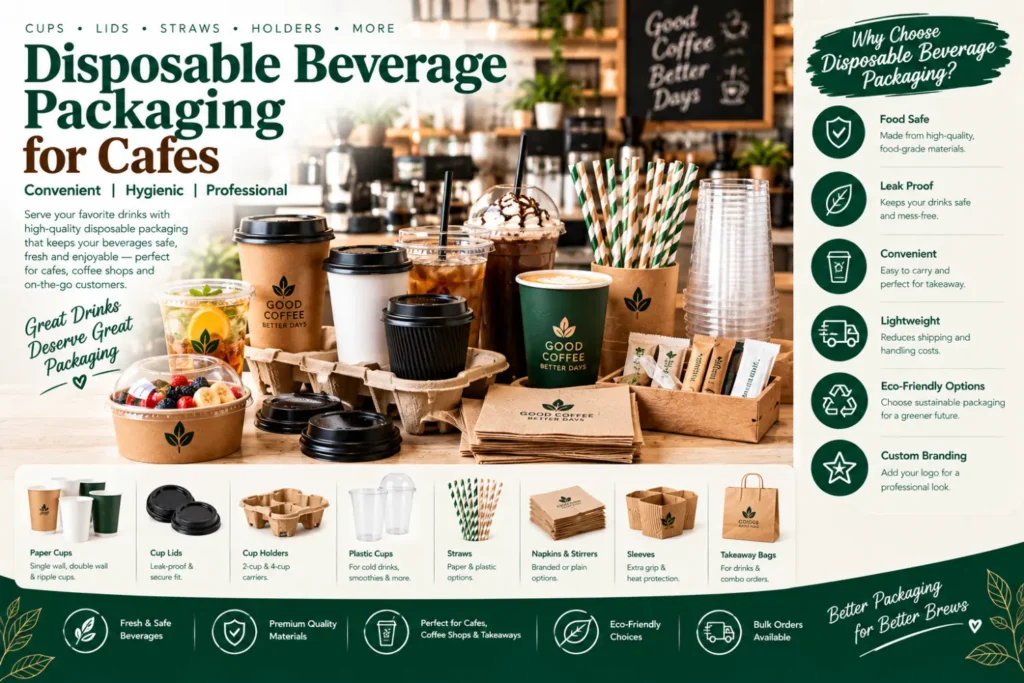
Disposable Beverage Packaging for Cafes
October 14, 2026
No Comments
The right disposable beverage packaging for a café depends on the drink. Hot drinks like
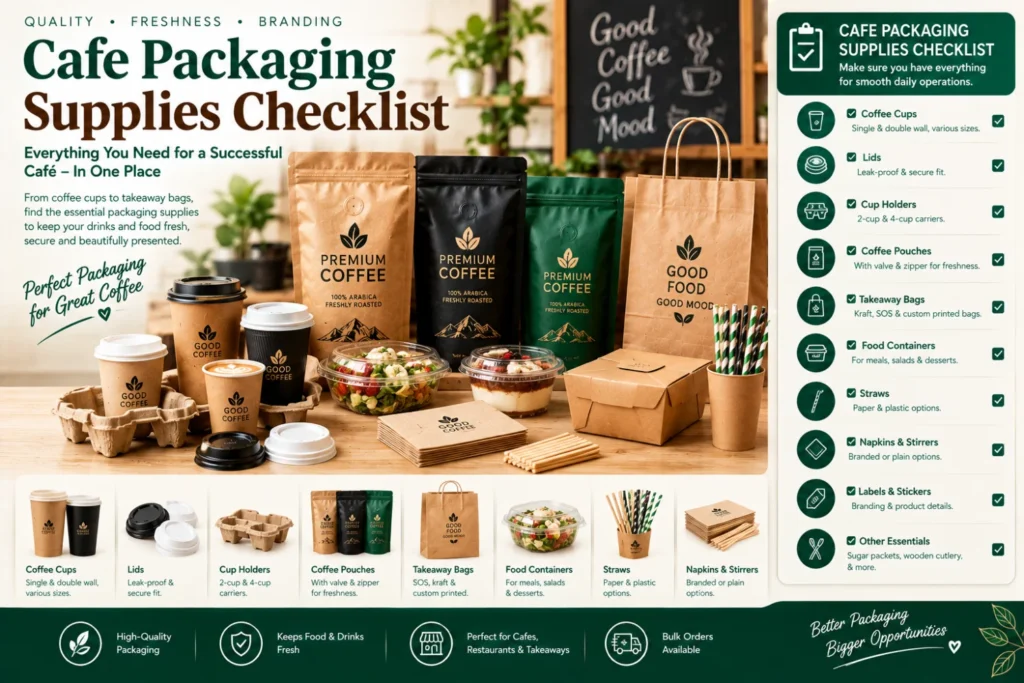
Cafe Packaging Supplies Checklist
October 10, 2026
No Comments
A café packaging supplies checklist covers six groups: drink cups and lids, food boxes and
FEEL FREE CONTACT US
info@packagingmaster.pk
03153127889
Packaging Master, serving Pakistan since 2020, specializes in premium disposable packaging boxes, food packaging, e-commerce cartons, kraft items, and fully customized solutions. Trusted by restaurants, SMEs, retail stores, and online sellers, we deliver durable, eco-friendly packaging with fast nationwide delivery and competitive pricing—making us a leading choice for reliable, high-quality packaging in Pakistan.
Company
Products
Contact Detail
- Rafi Group Landmark Plaza LG 60,61 Jail Road, Lahore
- Phone: +923153127889
- Email: info@packagingmaster.pk
© 2026 Packaging Master. All Rights Reserved.