For orders up to 3k, a 50% advance payment is required for order confirmation.

For orders up to 3k, a 50% advance payment is required for order confirmation.
Within Lahore PKR 250–600 (area-wise) | Out of Lahore PKR 400 (0–3 kg) | Above 3 kg +PKR 130/kg
Disposable Coffee Cups in Pakistan: The Complete Buying Guide for Cafés (2026)
- Hamza
- No Comments
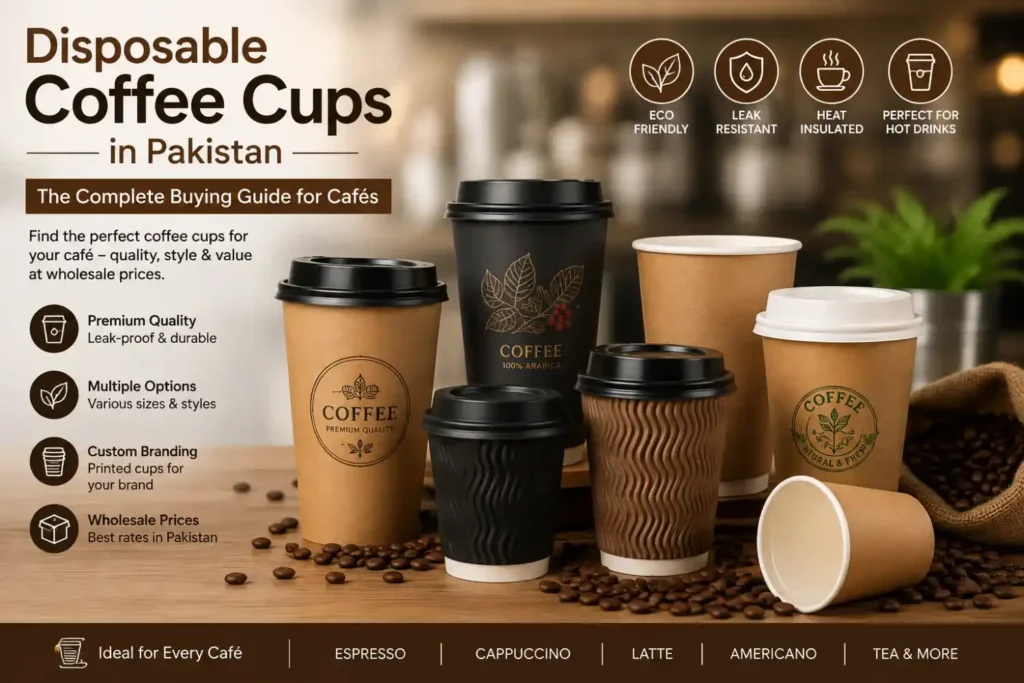
The best disposable coffee cup for a Pakistani café depends on the drink and the price point: single wall cups for budget takeaway tea and quick-service coffee, double wall cups for espresso-based drinks like lattes and cappuccinos where heat retention matters, and ripple wall cups for premium, specialty-coffee branding where grip and presentation carry as much weight as insulation. Getting this match right — rather than defaulting to one cup type for the whole menu — is what separates cafés that control their packaging cost from ones that either overspend on premium cups for everyday drinks or under-deliver on the specialty ones.
Pakistan’s café scene has expanded fast across Lahore, Karachi, and Islamabad, and the coffee cup a customer walks out holding is doing more work than most owners give it credit for — it signals heat retention, hygiene, and brand quality before the first sip. This guide covers the actual differences between cup types, what the numbers behind “insulation” really mean, sizing by drink, lid pairing, and how to source in bulk without overpaying.
Single Wall, Double Wall, and Ripple Wall: What Actually Separates Them
| Type | Construction | Heat retention | Best for | Typical cost position |
|---|---|---|---|---|
| Single wall | One layer of food-grade paper | Lowest — surface gets hot fast, sleeve often needed | Tea, quick-service coffee, high-volume counters | Most economical |
| Double wall | Two paper layers with an air gap between them | Good — the trapped air layer is the actual insulator, not just paper thickness | Lattes, cappuccinos, espresso-based drinks | Mid-range |
| Ripple wall | Corrugated (ripple) outer layer bonded to an inner wall | Best — the ridges create air pockets across the whole surface, not just one gap | Specialty coffee, branded premium service | Highest, but usually skips a separate sleeve cost |
The mechanism matters more than the marketing language: a double wall cup insulates because trapped air is a poor heat conductor, the same principle behind double-glazed windows. A ripple wall cup extends that same principle across the entire cup surface instead of a single sealed gap, which is why it typically outperforms double wall on grip and texture even at a similar core insulation level — and it’s also why a thin single wall cup burns fingers regardless of how thick the paper feels, since a single layer has no trapped-air barrier at all.
PE-Lined vs. PLA-Lined Cups: The Distinction Most Guides Skip
Every paper coffee cup needs an inner coating to stop liquid from soaking through the paper, and the coating type actually matters for both function and sourcing decisions:
- PE (polyethylene) lining – The standard, petroleum-based plastic lining used in most conventional paper cups. It’s reliable, cheap to produce, and handles typical hot-drink temperatures well, but it isn’t compostable — the plastic layer means the cup can’t fully break down in standard composting conditions even though the paper portion can.
- PLA (polylactic acid) lining – A plant-based bioplastic lining, usually derived from corn starch. It’s genuinely compostable under industrial composting conditions, which makes it the better fit for cafés building an eco-forward brand identity, though it typically costs more and can have a slightly lower heat tolerance ceiling than PE.
For most Pakistani cafés, PE-lined cups remain the practical default for cost and hot-drink reliability, while PLA-lined cups make sense specifically as a branding decision for cafés actively marketing sustainability — it’s worth asking suppliers directly which lining a cup uses, since “eco-friendly” is sometimes used loosely to describe kraft-colored PE cups that aren’t actually compostable.
What Size Cup for What Drink
| Size | Best for | Common drinks |
|---|---|---|
| 4oz–6oz | Espresso shots, small pours | Espresso, macchiato, cortado |
| 8oz | Standard single-serve coffee | Flat white, cappuccino, small latte |
| 12oz | Medium takeaway drinks | Latte, Americano, drip coffee |
| 16oz | Large/specialty drinks | Cold brew, iced latte, large takeaway coffee |
For most Pakistani cafés, 8oz and 12oz cover the bulk of daily orders, with 4-6oz needed only for espresso-focused menus and 16oz reserved for cold or specialty drinks.
Working Out What This Actually Costs You
Cup type decisions are easier with real numbers rather than gut-feel. A simple way to estimate:
Daily cups sold × cost per cup × 30 days = monthly cup spend
A café selling 200 cups a day, split roughly 60% single wall (tea/quick coffee) and 40% double wall (espresso drinks), is comparing two different cost baselines every month — which is exactly why menu-matching cup type to drink (rather than standardizing on one premium cup for everything) is a real lever on monthly packaging spend, not just an aesthetic choice. Ripple wall cups often close some of that gap in practice because they let a café skip a separate cardboard sleeve purchase entirely, which single wall service usually needs.
Lids: Flat vs. Dome
- Flat lids – Standard for hot drinks with a sip-through opening; pair with single, double, and ripple wall hot cups.
- Dome lids – Needed for cold drinks, frappés, or anything topped with whipped cream or foam that needs clearance above the rim. For cold beverage service, disposable glasses with dome lids are the standard pairing for iced coffee, shakes, and smoothies.
Always confirm lid compatibility with your supplier by cup diameter, not just by size label — an 8oz cup from one manufacturer isn’t guaranteed to match another’s 8oz lid.
What to Check When Sourcing Wholesale in Pakistan
At Packaging Master, we get asked the same handful of questions by café owners switching or scaling up their cup supply, so it’s worth checking these before committing to a bulk order with any supplier:
- Food-grade certification – Confirm the paper and lining are certified food-safe, especially for cups holding hot beverages for extended periods.
- Lining type disclosure – Ask directly whether a cup is PE or PLA lined rather than assuming from color or “eco” branding language.
- Sample testing before bulk commitment – Test actual heat retention and lid fit with your own drinks before placing a large order; specs on paper don’t always match real performance.
- Cost per cup, not per sleeve/pack – Compare suppliers on a true per-unit basis, since pack sizes and case counts vary.
- MOQ for custom printing – Branded cups typically require a higher minimum order than plain stock; confirm this fits your volume and cash flow.
FAQs
What’s the difference between single wall and double wall coffee cups?
Single wall cups have one layer of paper and offer minimal heat insulation, often requiring a sleeve for hot drinks. Double wall cups have two layers with a trapped air gap between them, which insulates significantly better and keeps the outer surface comfortable to hold without a separate sleeve.
Are PLA-lined coffee cups actually compostable?
PLA-lined cups are compostable under industrial composting conditions, not typically in a home compost bin or general landfill. If a café’s sustainability claim depends on compostability, it’s worth confirming the cup meets recognized compostable certification standards rather than assuming based on kraft coloring alone.
What size coffee cup is best for a cappuccino or latte?
8oz is the standard size for a cappuccino or small latte, while 12oz suits a medium latte or Americano. Espresso-only drinks like macchiatos are better served in 4–6oz cups to match the actual drink volume.
Do ripple wall cups need a separate sleeve?
No — the ripple wall’s corrugated outer layer is designed to provide grip and insulation on its own, which is one of its main advantages over single wall cups that typically need an added cardboard sleeve for hot drinks.
Is it cheaper to buy single wall or double wall cups in bulk?
Single wall cups are cheaper per unit, but the total cost picture should include sleeves if they’re needed for hot drinks — once sleeve cost is factored in, the price gap between single wall (with a sleeve) and double wall (without one) is often smaller than the sticker price alone suggests.
Related Posts:
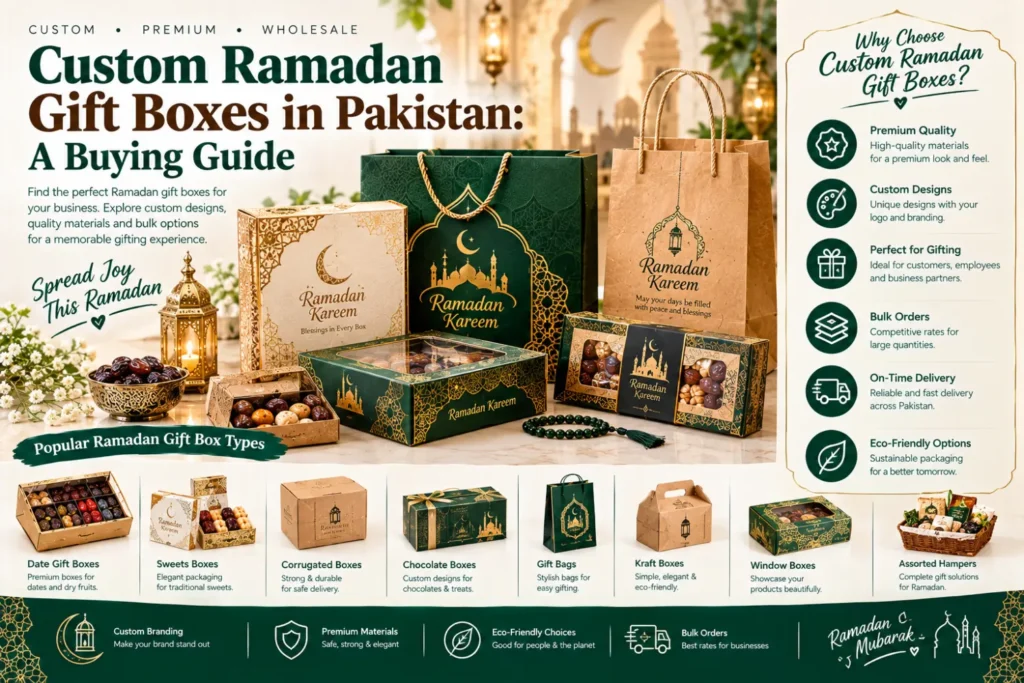
Custom Ramadan Gift Boxes in Pakistan: A Buying Guide
October 5, 2026
No Comments
A Ramadan gift box is only as good as the box itself. The contents matter,
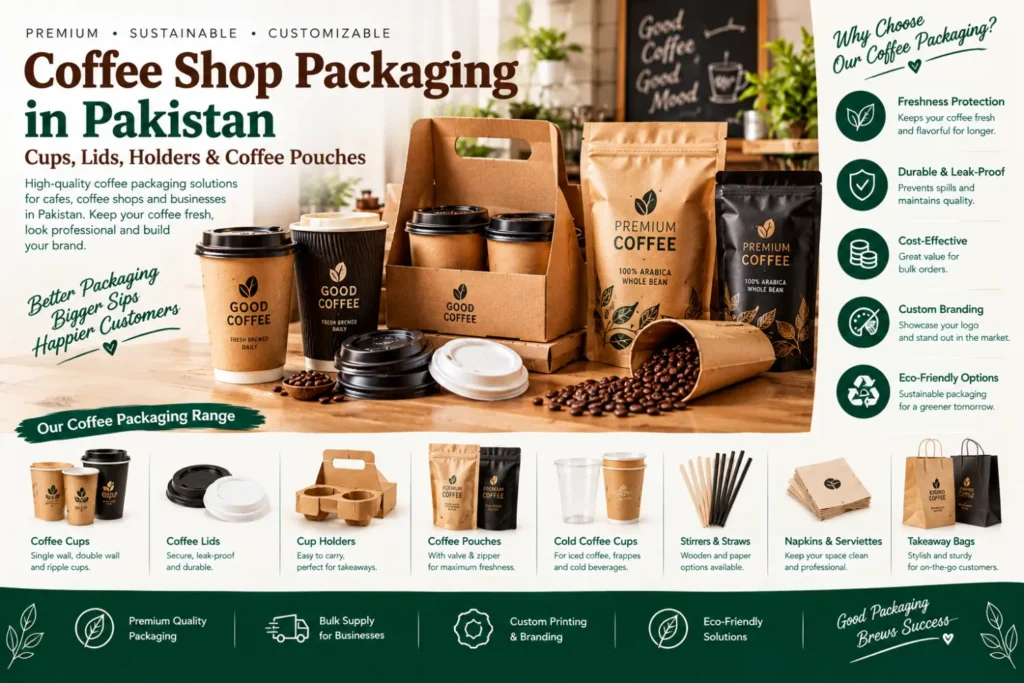
Coffee Shop Packaging in Pakistan: Cups, Lids, Holders & Coffee Pouches
October 4, 2026
No Comments
A coffee shop needs two very different kinds of packaging. One for drinks served to
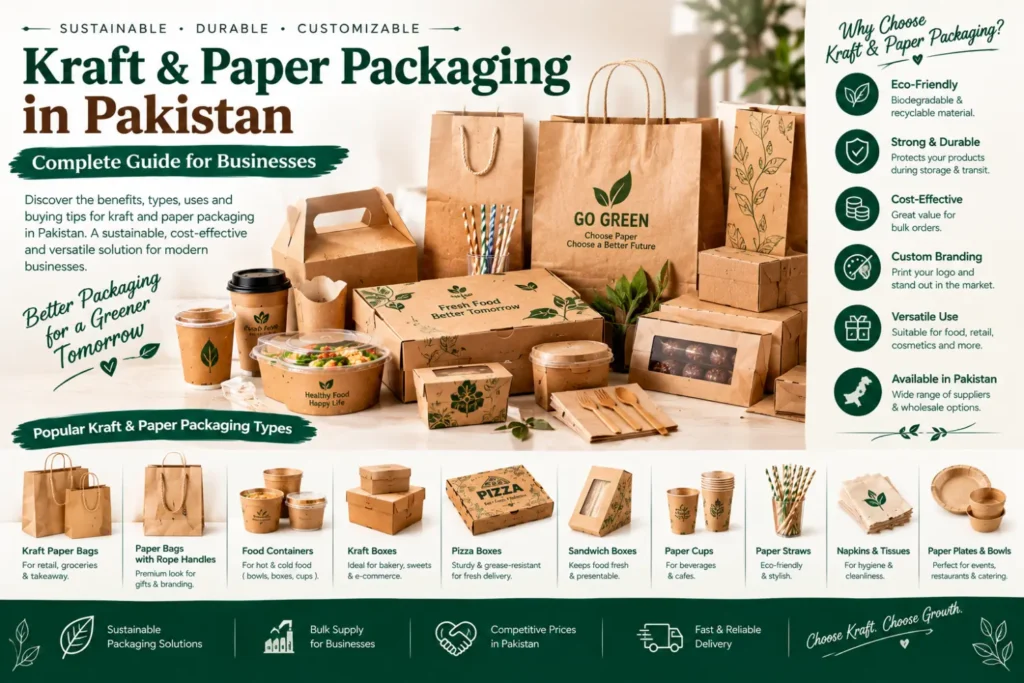
Kraft & Paper Packaging in Pakistan: Complete Guide for Businesses
October 3, 2026
No Comments
Kraft and paper packaging covers more ground than most businesses realize. Boxes. Bags. Trays. Wraps.
FEEL FREE CONTACT US
info@packaigngmaster.pk
923153127889
Packaging Master, serving Pakistan since 2020, specializes in premium disposable packaging boxes, food packaging, e-commerce cartons, kraft items, and fully customized solutions. Trusted by restaurants, SMEs, retail stores, and online sellers, we deliver durable, eco-friendly packaging with fast nationwide delivery and competitive pricing—making us a leading choice for reliable, high-quality packaging in Pakistan.
Company
Products
Contact Detail
- Rafi Group Landmark Plaza LG 60,61 Jail Road, Lahore
- Phone: +923153127889
- Email: info@packagingmaster.pk
© 2026 Packaging Master. All Rights Reserved.