For orders up to 3k, a 50% advance payment is required for order confirmation.

For orders up to 3k, a 50% advance payment is required for order confirmation.
Within Lahore PKR 250–600 (area-wise) | Out of Lahore PKR 400 (0–3 kg) | Above 3 kg +PKR 130/kg
Stand-Up Pouches in Pakistan: Types, Sizes, Uses & Buying Guide
- Hamza
- No Comments
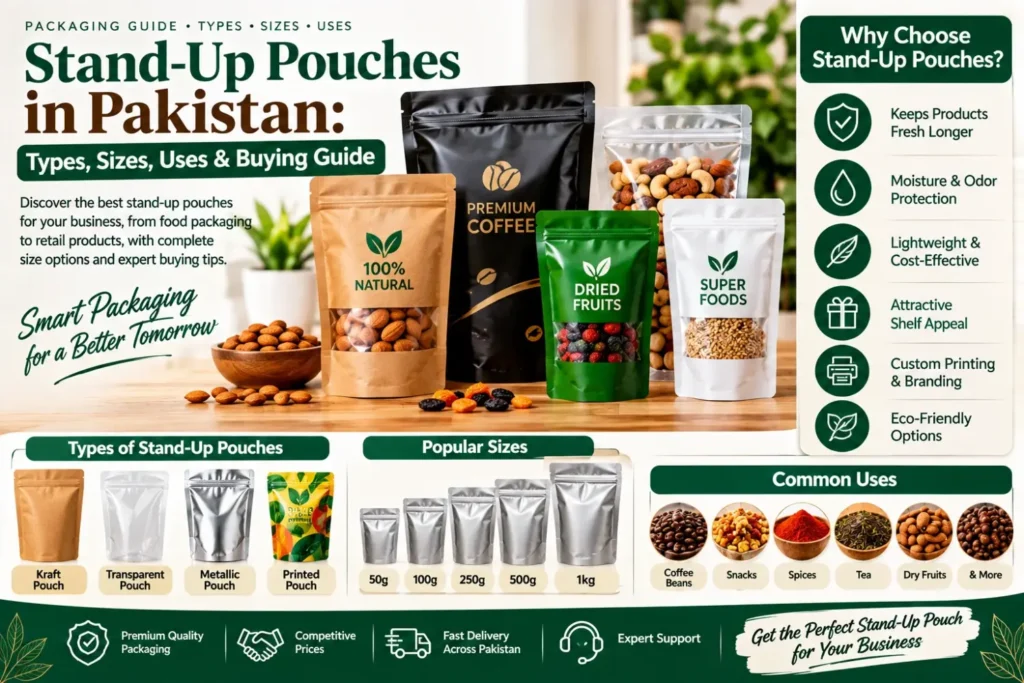
A stand-up pouch is a flexible bag with a gusseted base that lets it stand upright on a shelf. The main types in Pakistan are kraft, clear zipper, retort and valve pouches. Choose by product. Use kraft with a barrier lining for spices, tea and coffee. Use clear zipper pouches for dry goods you want customers to see. Use retort pouches for sterilized ready meals. Pick the size by weight, then test a sample.
What Is a Stand-Up Pouch?
A stand-up pouch is a pre-made flexible bag. It has a folded bottom, called a gusset. When you fill it, the base opens and the bag stands on its own.
You may also hear it called a doypack or stand-up bag. It is made from layered films or kraft paper. Each layer has a job. One layer protects against moisture. Another blocks oxygen. Another allows heat sealing.
Compared with jars, tins or boxes, pouches are lighter. They take less storage space. They also cost less to ship. That is why food, snack, spice, coffee and ready-meal brands use them widely.
Why Businesses Choose Stand-Up Pouches
- Shelf impact. The bag stands upright and shows your branding at eye level.
- Product protection. The right laminate keeps out moisture, oxygen and light.
- Convenience. Zippers let customers reseal the bag.
- Lower packaging weight. Freight and storage costs drop.
- Flexible branding. Large flat surfaces suit logos, labels and product details.
- Works for small brands. Home-based and growing food businesses can start with small runs.
Types of Stand-Up Pouches
1. Kraft Stand-Up Pouches
Kraft pouches use a natural brown or white kraft paper outer layer. Many have an aluminium or barrier lining inside. The paper gives a premium, natural look. The lining does the protecting.
Common styles include white kraft paper pouches, white stand-up pouches with aluminium inside, and window pouches with an aluminium layer. They suit coffee, tea, spices, nuts and dry snacks.
Browse the full kraft stand-up pouches range.
2. Clear and Window Zipper Pouches
These put visibility first. Customers can see the product before they buy. Options include standard clear zipper pouches, heavy-duty flat-bottom pouches with side gussets, and front-clear versions with a metallic foil back.
They suit dried fruit, candy, snacks, granola and other dry goods where the product itself sells the pack. Clear film lets in more light. So they work best for fast-moving stock.
See our clear zipper stand-up pouches.
3. Retort Pouches
Retort pouches are multilayer laminates built to survive high-temperature sterilization. The food is sealed in the pouch, then heat-processed. This gives it a long shelf life without refrigeration.
They suit ready-to-eat meals, curries, gravies, seafood, pet food and other sterilized products. They are a premium option, because of the laminate and the process.
Explore seal retort stand-up pouches.
4. Valve Pouches
A valve pouch has a one-way degassing valve. It lets gas out without letting air in. Freshly roasted coffee needs this, because beans release CO2 for days after roasting.
Valve pouches usually also have a zipper. They are found in the kraft stand-up pouch range as coffee valve zipper pouches. For a full coffee-specific walkthrough, see our coffee pouch guide for roasters.
Stand-Up Pouches vs Other Pouch Formats
| Format | Stands Upright | Best For | Trade-Off |
|---|---|---|---|
| Stand-up pouch | Yes | Retail shelves, snacks, spices, coffee | Slightly higher cost than flat pouches |
| Flat (3-side seal) pouch | No | Sachets, samples, single-use items | No shelf presence |
| Flat-bottom (box) pouch | Yes, very stable | Premium coffee, heavy products | Higher cost |
| Side-gusset bag | Sometimes | Bulk coffee, tea, rice | Less shelf appeal |
Quick Picker: Which Pouch for Which Product?
| Product | Recommended Pouch | Key Features |
|---|---|---|
| Spices and masala | Kraft with barrier lining | Zipper, moisture barrier |
| Tea | Kraft with aluminium lining | Zipper, light and moisture protection |
| Roasted coffee beans | Kraft or foil-lined with valve | One-way valve, zipper |
| Dried fruit and nuts | Clear or window zipper pouch | Zipper, visibility |
| Snacks and candy | Clear zipper or foil-back pouch | Zipper, tear notch |
| Rice, pulses and grains | Heavy-duty flat-bottom pouch | Strong seams, side gussets |
| Ready meals and curries | Retort pouch | High-temperature sterilization |
| Pet food | Retort or heavy-duty barrier pouch | Strength, barrier layers |
| Powders (protein, mixes) | Barrier pouch with zipper | Moisture protection |
Sizes: How to Choose by Weight
Pouch size depends on three things. Weight of the product. Density of the product. And how full you want the bag to look.
Light, fluffy products like chips need a bigger bag than heavy ones like rice. Always check capacity with your own product.
| Fill Weight | Typical Use |
|---|---|
| 50–100 g | Samples, spices, herbs, tea sachets, gift sizes |
| 250 g | Retail spices, coffee, nuts, dried fruit |
| 500 g | Larger retail packs, family sizes |
| 1 kg | Bulk retail, pulses, rice, coffee for heavy users |
Dimensions differ between suppliers and depend on gusset depth. Treat any size chart as a starting point, not a promise. Ask your supplier for exact width, height and gusset measurements. Then fill-test a sample.
Materials and Barrier Layers Explained
The structure of the laminate decides how long your product stays fresh. Look at these properties.
- Oxygen barrier. Slows oxidation, which causes stale flavors and rancidity.
- Moisture barrier. Stops products going soft, clumping or spoiling.
- Light barrier. Protects color, flavor and nutrients in light-sensitive products.
- Heat sealability. The inner layer must seal well to hold the pouch closed.
| Structure | Barrier Level | Typical Use |
|---|---|---|
| Kraft with PE lining | Basic to moderate | Dry, short-shelf-life items |
| Kraft with aluminium or barrier layer | High | Coffee, tea, spices |
| Clear PET/PE | Moderate | Dry snacks, quick-selling goods |
| Foil-based laminate | Very high | Light- and oxygen-sensitive products |
| Retort laminate | Very high, heat-resistant | Sterilized ready meals |
Ask your supplier for the exact structure, such as PET/AL/PE, and whether it is food-grade.
Custom Printing Options
- Plain stock pouches. Cheapest. Add a sticker label for branding.
- Sticker labels on plain pouches. Good for testing recipes and small batches.
- Custom printed pouches. Logo and full artwork printed on the bag. Best for brand building.
Custom printing usually requires a higher minimum order than plain stock. Many new food brands start with stickers. They move to printed pouches once sales are steady.
How to Choose the Right Stand-Up Pouch in 6 Steps
- Define your product. Note whether it is dry, oily, liquid, fragile or heat-processed.
- Pick the barrier level. Match protection to shelf life and sensitivity.
- Choose the features. Decide on zipper, valve, window and tear notch.
- Select the size. Match fill weight, then fit-test with your own product.
- Decide on branding. Choose plain stock, stickers or custom printing.
- Order a sample. Check seal strength, zipper quality and print before a bulk order.
What Does a Pouch Cost You Per Unit?
Track packaging cost against your product price.
Pouch cost % = pouch cost per unit ÷ product selling price × 100
Illustration only: If a pouch costs Rs. 35 and the packed product sells for Rs. 600, packaging is about 5.8% of the price. Use your real numbers.
Cost drivers include:
- Size. Bigger bags cost more.
- Material. Foil and retort laminates cost more than kraft or clear film.
- Features. Valves, zippers and windows add cost.
- Printing. Custom print costs more than plain stock.
- Order quantity. Per-unit price falls as volume rises.
Common Mistakes When Buying Stand-Up Pouches
- Choosing by looks alone. A pretty bag with weak barrier layers shortens shelf life.
- Skipping the fill test. Capacity varies by product density.
- Using clear pouches for light-sensitive products.
- Forgetting the valve on fresh-roasted coffee.
- Ordering custom print too early. Test the recipe and sales first.
- Comparing price per pack, not per unit.
- Ignoring the seal. Test with a heat sealer and a gentle squeeze test.
Quality Checklist Before You Buy in Bulk
- Is the film food-grade?
- Is the barrier right for my product?
- Does the zipper open and close cleanly after several uses?
- Are the seams and seals strong when filled?
- Does the pouch stand upright when full?
- Does my filled sample fit and look right?
- Does the printed colour match my approved artwork?
- Do the MOQ and lead time fit my plan?
How to Choose a Stand-Up Pouch Supplier in Pakistan
At Packaging Master, food brands usually ask us three things first: “Which pouch do I need?”, “What size?” and “What is the minimum order?” Our advice is simple. Pick by product and barrier level, check size with a filled sample, and start small before you scale.
For a wider checklist on vetting any supplier, read our guide to choosing a packaging supplier in Pakistan.
Need other food packaging alongside your pouches? Explore our food packaging range.
Ready to start? Browse the kraft stand-up pouches and request samples before your first bulk order.
FAQs
What is a stand-up pouch?
A stand-up pouch is a pre-made flexible bag with a gusseted base that stands upright when filled. It is made from layered films or kraft paper and is widely used for food, snacks, spices, coffee and ready meals.
What are the main types of stand-up pouches?
The main types are kraft pouches, clear or window zipper pouches, retort pouches and valve pouches. Each suits different products and shelf-life needs.
What size stand-up pouch do I need?
Choose by fill weight, such as 250 g, 500 g or 1 kg. Then fit-test with your own product, because capacity depends on gusset depth and product density.
Which pouch is best for spices and tea?
A kraft pouch with a barrier lining and a zipper works well. The lining protects against moisture, oxygen and light. The zipper keeps the contents fresh after opening.
Do coffee bags need a valve?
Yes, for freshly roasted whole beans. The one-way valve releases CO2 without letting oxygen in. Pre-ground or fully rested coffee can use a zipper pouch without a valve.
What is a retort pouch used for?
A retort pouch holds food that is sealed and then heat-sterilized. It suits ready-to-eat meals, curries, seafood and pet food that need a long shelf life without refrigeration.
Can stand-up pouches be custom printed?
Yes. Custom printed pouches carry your logo and artwork. They usually need a higher minimum order than plain stock pouches. Many new brands start with stickers.
Is it cheaper to buy stand-up pouches in bulk?
Yes. Per-unit cost falls as order volume rises. Barrier layers, features and printing also change the price.
Related Posts:
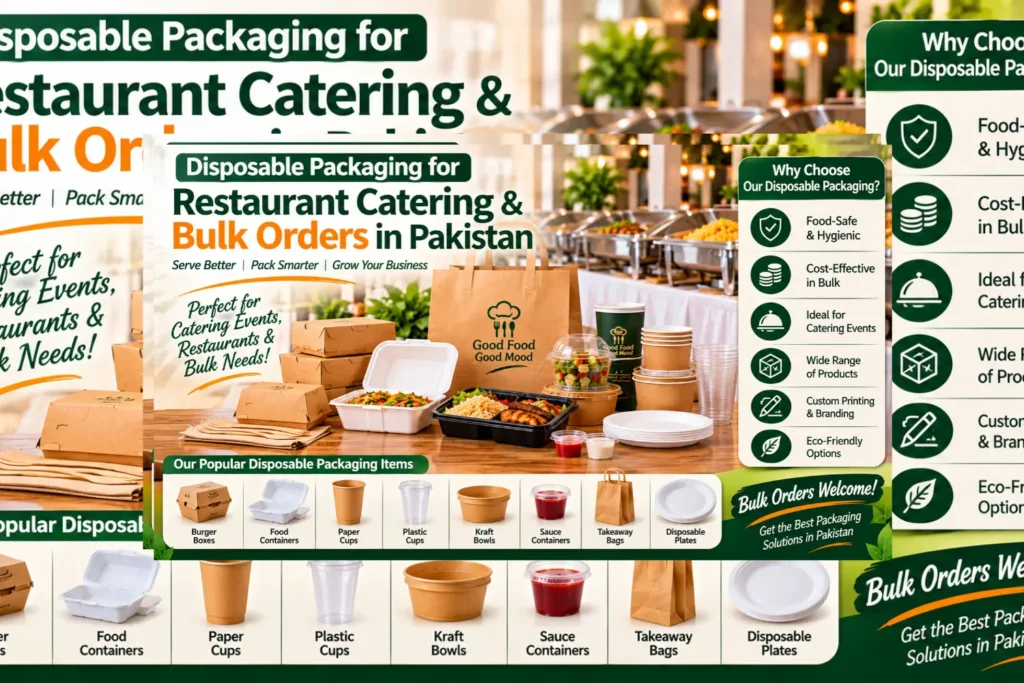
Disposable Packaging for Restaurant Catering & Bulk Orders in Pakistan
November 21, 2026
No Comments
Catering and bulk orders need five kinds of disposable packaging. Aluminium containers to hold and
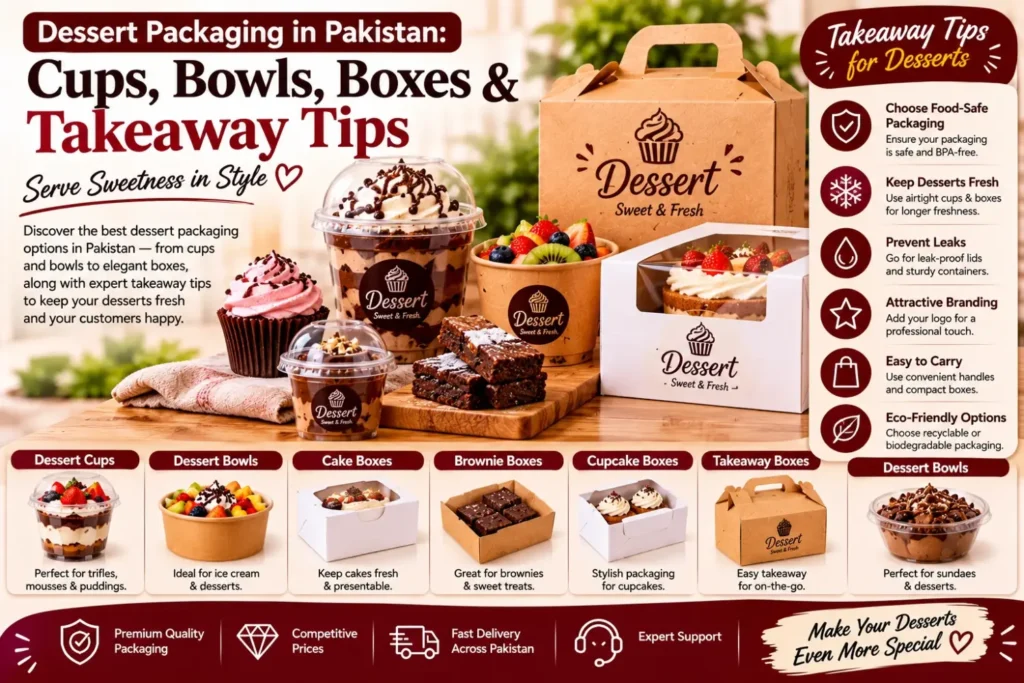
Dessert Packaging in Pakistan: Cups, Bowls, Boxes & Takeaway Tips
November 8, 2026
No Comments
The right dessert packaging depends on whether the dessert is cold, wet or baked. Use
Stand-Up Pouches in Pakistan: Types, Sizes, Uses & Buying Guide
November 2, 2026
No Comments
A stand-up pouch is a flexible bag with a gusseted base that lets it stand
FEEL FREE CONTACT US
info@packagingmaster.pk
03153127889
Packaging Master, serving Pakistan since 2020, specializes in premium disposable packaging boxes, food packaging, e-commerce cartons, kraft items, and fully customized solutions. Trusted by restaurants, SMEs, retail stores, and online sellers, we deliver durable, eco-friendly packaging with fast nationwide delivery and competitive pricing—making us a leading choice for reliable, high-quality packaging in Pakistan.
Company
Products
Contact Detail
- Rafi Group Landmark Plaza LG 60,61 Jail Road, Lahore
- Phone: +923153127889
- Email: info@packagingmaster.pk
© 2026 Packaging Master. All Rights Reserved.