For orders up to 3k, a 50% advance payment is required for order confirmation.

For orders up to 3k, a 50% advance payment is required for order confirmation.
Within Lahore PKR 250–600 (area-wise) | Out of Lahore PKR 400 (0–3 kg) | Above 3 kg +PKR 130/kg
Burger Box Buying Guide: Sizes, Materials & Choosing a Supplier in Pakistan
- Hamza
- No Comments
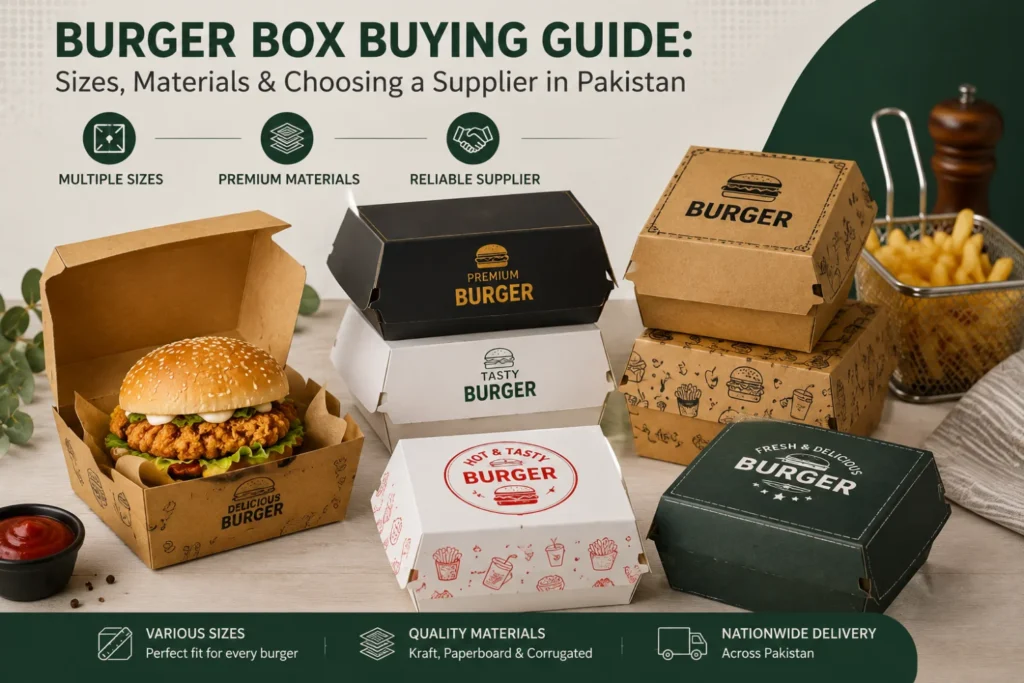
The right burger box for a Pakistani fast food brand depends on matching three things correctly: a size that fits the actual burger without crushing it or leaving it loose, a material suited to how greasy and hot the food is, and a supplier that can hold consistent quality across repeat bulk orders — get any one of these wrong and the result is either a burger that arrives squashed, a box that soaks through with grease, or inconsistent packaging that undermines an otherwise good product. This guide covers all three so a buyer can make an informed choice before placing a bulk order, not after a batch of complaints.
Burger boxes look like a simple, interchangeable commodity until a business actually switches suppliers or scales up order volume, at which point size mismatches, material weaknesses, and supplier inconsistency all tend to surface at once. Fast food brands with a broader menu often pair burger boxes with shawarma boxes to cover their full lineup from one supplier — getting the fundamentals right upfront on both fronts avoids most of the common complaints.
Sizing: Match the Box to the Burger, Not the Other Way Around
Burger boxes are typically available across a small range of standard sizes, and picking the wrong one creates two different problems:
- Too small – The burger gets compressed, toppings get pushed out the sides, and the box may not close properly, especially with double-patty or loaded burgers.
- Too large – The burger shifts around during delivery, which can knock toppings out of place and make for a messier unboxing experience than a properly fitted box.
As a general reference point, standard burger box sizes commonly available in the market run roughly from small (around 4.5×4.5×3 inches) for single-patty burgers up to large (around 6×6×4 inches or bigger) for stacked, multi-patty, or loaded burgers. A menu with more than one burger size — a classic single-patty item alongside a larger signature burger — usually needs at least two box sizes rather than forcing every item into one dimension.
Materials: Kraft, Cardboard, Bagasse, and What Each One Solves
Burger box material affects heat retention, grease resistance, presentation, and cost, and the four common options each solve a slightly different priority:
| Material | Strengths | Best For |
|---|---|---|
| Kraft | Recyclable, biodegradable, natural look | Brands wanting an eco-conscious, rustic presentation |
| Cardboard | Strong, heat-resistant, affordable | General-purpose use where durability and cost matter most |
| Bagasse | Compostable, made from sugarcane pulp byproduct | Brands actively marketing sustainability credentials |
| Disposable (standard) | Lightweight, hygienic, convenient | High-volume quick-service where speed and cost dominate |
For most Pakistani fast food and delivery brands, kraft and cardboard burger boxes cover the bulk of everyday needs, with bagasse reserved for brands specifically building an eco-forward identity where the added cost is justified by the branding value.
Ventilation: A Small Detail That Prevents a Common Complaint
Steam trapped inside a sealed burger box is one of the most common causes of a soggy bun by the time a delivery order arrives. Burger boxes with small ventilation holes let steam escape without letting the burger go cold too quickly, which matters more for delivery orders with longer transit times than for immediate dine-in service. It’s worth confirming whether a box design includes ventilation, especially for a brand doing meaningful delivery volume.
What to Actually Check in a Supplier
This is the part that determines whether a good box on day one stays a good box on order five hundred:
- Sample testing with your actual menu – Load a sample box with your heaviest, saltiest, greasiest burger before committing to a bulk order; a box that handles a simple beef patty fine may not hold up to a loaded, sauce-heavy signature item.
- Consistency across batches – Ask how a supplier handles quality control between production runs; inconsistent board thickness or fold quality is a common complaint that only shows up at scale, not in a small sample.
- Food-grade certification – Non-negotiable for direct food contact; confirm this regardless of which material you choose.
- Custom printing and branding options – Since the box is often the first physical brand touchpoint a delivery customer sees, confirm what custom printing options and MOQs a supplier offers.
- MOQ and lead time that fit your actual volume – A supplier’s minimum order and turnaround time should match your realistic monthly volume, not force you into overstocking or understocking.
- Track record and transparency – A supplier willing to provide samples, clear pricing at different quantity tiers, and a straightforward answer on lead times is generally more reliable long-term than one who’s vague on any of these.
FAQs
What size burger box should I use for a double-patty burger?
Larger burgers with multiple patties or heavy toppings generally need a box in the large range (roughly 6×6×4 inches or bigger) to avoid crushing the contents or preventing the lid from closing properly. Standard single-patty burgers are usually well served by a small or medium box.
Which material is best for burger boxes — kraft, cardboard, or bagasse?
Cardboard is generally the most durable and cost-effective for everyday use, kraft offers a natural, recyclable look at a similar price point, and bagasse is the most eco-credentialed option, being compostable and made from a sugarcane byproduct, though it typically costs more. The right choice depends on your brand positioning as much as function.
Do burger boxes need ventilation holes?
For delivery orders or any burger that needs to travel before being eaten, ventilation helps release steam and prevents the bun from getting soggy. For immediate dine-in service where the burger is eaten right away, ventilation matters less.
How do I know if a burger box supplier is reliable?
Request a physical sample tested with your actual menu items, ask about their process for maintaining consistency across production batches, and confirm food-grade certification, MOQ, and lead times upfront. A supplier that’s transparent and willing to provide samples before a bulk commitment is generally a stronger long-term choice.
Is it cheaper to buy burger boxes in bulk?
Yes, buying burger boxes in bulk from a wholesale supplier is generally more cost-effective per unit than smaller retail-style orders, particularly for restaurants and delivery brands with steady daily volume.
Related Posts:
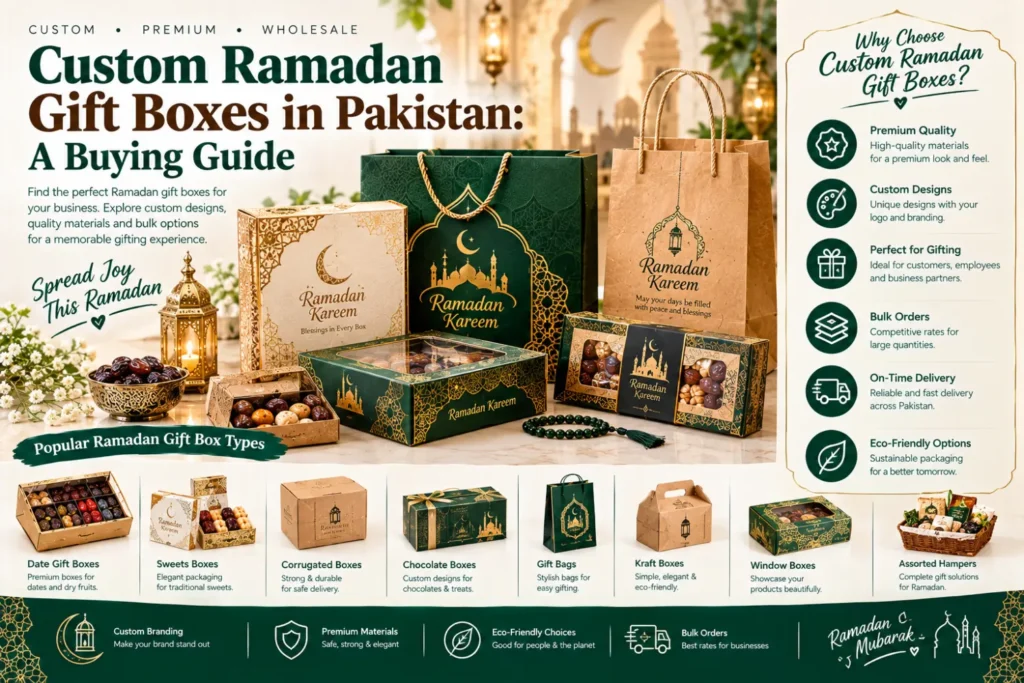
Custom Ramadan Gift Boxes in Pakistan: A Buying Guide
October 5, 2026
No Comments
A Ramadan gift box is only as good as the box itself. The contents matter,
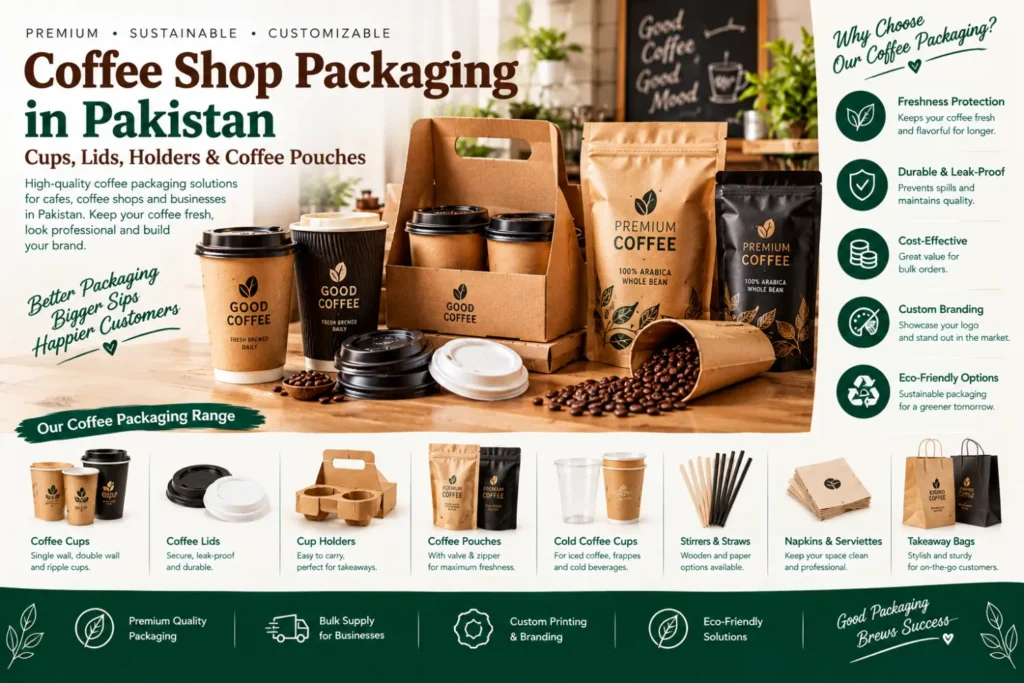
Coffee Shop Packaging in Pakistan: Cups, Lids, Holders & Coffee Pouches
October 4, 2026
No Comments
A coffee shop needs two very different kinds of packaging. One for drinks served to
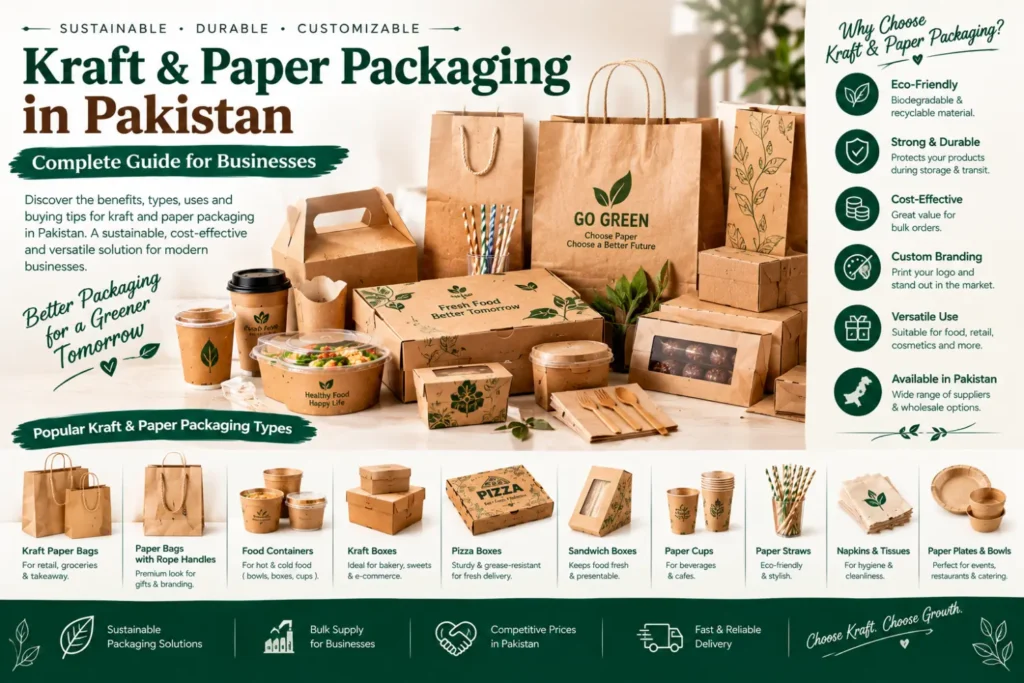
Kraft & Paper Packaging in Pakistan: Complete Guide for Businesses
October 3, 2026
No Comments
Kraft and paper packaging covers more ground than most businesses realize. Boxes. Bags. Trays. Wraps.
FEEL FREE CONTACT US
info@packaigngmaster.pk
923153127889
Packaging Master, serving Pakistan since 2020, specializes in premium disposable packaging boxes, food packaging, e-commerce cartons, kraft items, and fully customized solutions. Trusted by restaurants, SMEs, retail stores, and online sellers, we deliver durable, eco-friendly packaging with fast nationwide delivery and competitive pricing—making us a leading choice for reliable, high-quality packaging in Pakistan.
Company
Products
Contact Detail
- Rafi Group Landmark Plaza LG 60,61 Jail Road, Lahore
- Phone: +923153127889
- Email: info@packagingmaster.pk
© 2026 Packaging Master. All Rights Reserved.