For orders up to 3k, a 50% advance payment is required for order confirmation.

For orders up to 3k, a 50% advance payment is required for order confirmation.
Within Lahore PKR 250–600 (area-wise) | Out of Lahore PKR 400 (0–3 kg) | Above 3 kg +PKR 130/kg
Eco-Friendly Food Packaging in Pakistan: Buying Guide for Restaurants and Caterers
- Hamza
- No Comments
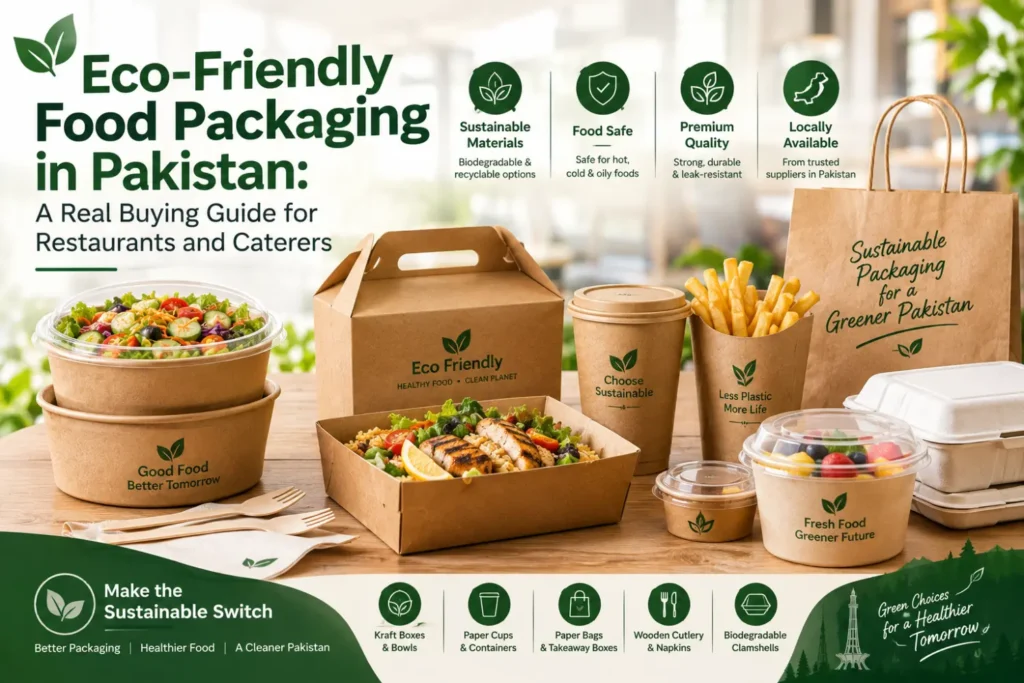
The right eco-friendly food packaging for a Pakistani restaurant or catering business depends on what’s being served and how it’s ordered: paper-based packaging for light, dry items and everyday takeaway, sugarcane bagasse for hot, oily, or heavier food that needs genuine heat and grease resistance, and kraft board for anything wanting a natural, premium presentation alongside solid structural strength. Choosing based on actual menu and service style — rather than a single generic “eco-friendly” order — is what determines whether the switch from plastic actually works in daily service or creates new problems like soggy boxes and leaking containers.
Food businesses across Pakistan are moving away from plastic packaging for real reasons: tightening single-use plastic restrictions in cities like Islamabad, customer expectations shifting toward visible sustainability, and — for many businesses — genuine cost efficiency at scale once the right material is matched to the right menu item. But “eco-friendly food packaging” isn’t one product; it’s a category covering several genuinely different materials, each solving a different combination of problems. This guide covers what those materials actually do, how to match them to a real menu, and what to check before committing to a bulk supplier.
The Main Eco-Friendly Packaging Materials, and What Each One Actually Solves
| Material | Strengths | Best For | Where It Falls Short |
|---|---|---|---|
| Paper-based (boxes, bags, wrap) | Lightweight, recyclable, low cost | Dry snacks, sandwiches, light takeaway | Limited grease/moisture resistance without coating |
| Bagasse (sugarcane) | Compostable, strong under heat and oil | Biryani, curry, grilled food, hot/oily menus | Higher cost than plain paper |
| Kraft paperboard | Strong, food-grade, natural premium look | Burgers, sandwiches, bakery items, gifting | Needs proper lining for very wet/saucy food |
| Compostable plant-based containers | Breaks down naturally, genuine end-of-life sustainability | Brands prioritizing a full sustainability claim | Cost and sourcing consistency vary by supplier |
Most food businesses don’t standardize on just one of these — a typical restaurant menu spans dry items, oily items, and bakery-style items, which is exactly why real packaging planning happens at the SKU level, not as a single blanket “switch to eco” decision.
Matching Packaging to What You’re Actually Serving
- Burgers and sandwiches – Kraft sandwich boxes and burger boxes offer structural support and grease resistance without the plastic footprint, with kraft, cardboard, and bagasse variants covering different budget and branding needs.
- Biryani, curry, and hot/oily dishes – Bagasse-based containers handle heat and oil better than standard paper, making them the more reliable eco-friendly choice for Pakistan’s heavier, sauce-forward menu staples.
- Shawarma and wraps – Purpose-built shawarma boxes and pouches manage grease and leak risk in a way generic boxes don’t.
- Bakery items and cakes – Cake boxes and gable boxes combine eco-friendly kraft or cardboard construction with presentation that matches bakery pricing.
- Coffee and hot beverages – Single wall coffee cups, double wall coffee cups, and ripple wall cups each offer different eco/insulation tradeoffs depending on drink type.
- Straws and small accessories – Paper straws are now a practical necessity in parts of Pakistan given tightening plastic restrictions, not just a nice-to-have.
Where to Actually Buy: What Separates a Reliable Supplier from a Risky One
This is the part most guides skip entirely. Finding “a supplier” is easy; finding one that won’t cause a mid-service packaging failure takes checking a few specific things:
- Sample testing before bulk commitment – Test any new packaging with your actual heaviest, oiliest, saltiest menu item before ordering at scale. Specs on a product page don’t always reflect real kitchen conditions.
- Consistency across production batches – Ask directly how a supplier maintains quality control between runs; inconsistent board thickness or bagasse density is a common complaint that only shows up once you’re ordering at volume, not in a small sample.
- Genuine compostability vs. marketing language – Not everything labeled “eco-friendly” is actually compostable or biodegradable in practice. Ask for real material specification, not just packaging that looks natural or brown.
- Nationwide delivery, not single-city coverage – A business in Lahore, Islamabad, or Faisalabad shouldn’t be limited to suppliers built around one city’s logistics; confirm delivery coverage matches where you actually operate.
- MOQ that matches your real order volume – Minimums for custom-printed eco packaging are typically higher than for plain stock; confirm this fits your cash flow and storage space before committing.
- Transparent, tiered pricing – A supplier who can clearly break down cost at different order volumes is easier to plan around than one offering a single vague “affordable” quote.
At Packaging Master, this is the exact checklist we walk food businesses through when they’re switching away from plastic for the first time — because the material choice only pays off if the sourcing behind it is actually reliable at scale.
Why This Is a Business Decision, Not Just an Environmental One
Beyond the sustainability angle, matching packaging correctly to your menu directly affects cost and customer experience: the right bagasse container for a hot biryani order prevents the soggy-box complaints that come from using plain paper for the wrong item, and a properly fitted eco-friendly box reduces returns and re-deliveries caused by leaks. Sustainable packaging that’s also functionally correct for the food inside it is what actually protects both your margins and your brand — packaging that’s eco-friendly in theory but fails in practice costs more in complaints and re-orders than it saves in “green” positioning.
FAQs
What is the best eco-friendly packaging for hot, oily Pakistani food like biryani or curry?
Bagasse (sugarcane) packaging generally performs best for hot, oily food, since it handles heat and grease significantly better than standard paper packaging while remaining genuinely compostable. Standard kraft or paper packaging is better suited to drier, lighter menu items.
Is kraft packaging actually eco-friendly, or just marketed that way?
Genuine kraft paperboard is recyclable and biodegradable, but it’s worth confirming with a supplier whether a specific product uses a plastic-based coating for moisture resistance, since that can affect how fully it breaks down. Asking directly about material composition avoids relying on brown coloring alone as a sustainability signal.
How much more expensive is eco-friendly packaging compared to plastic?
Pricing varies by material — paper-based options are often comparable to or only slightly more than plastic, while bagasse and fully compostable containers typically cost more due to more complex manufacturing. For many businesses, the cost difference is offset by reduced complaints from better-performing packaging and growing regulatory pressure on plastic alternatives.
Can I get eco-friendly packaging delivered outside Karachi or Lahore?
This depends entirely on the supplier — some are built around single-city logistics, while others offer genuine nationwide delivery. It’s worth confirming actual delivery coverage for your specific city before committing to a supplier, rather than assuming based on their homepage claims.
What’s the minimum order quantity for eco-friendly food packaging in Pakistan?
MOQ varies by product and whether it’s custom printed or plain stock — custom-branded eco packaging generally requires a higher minimum than plain stocked options. It’s best to confirm MOQ directly for your specific product and volume before planning a switch.
Related Posts:
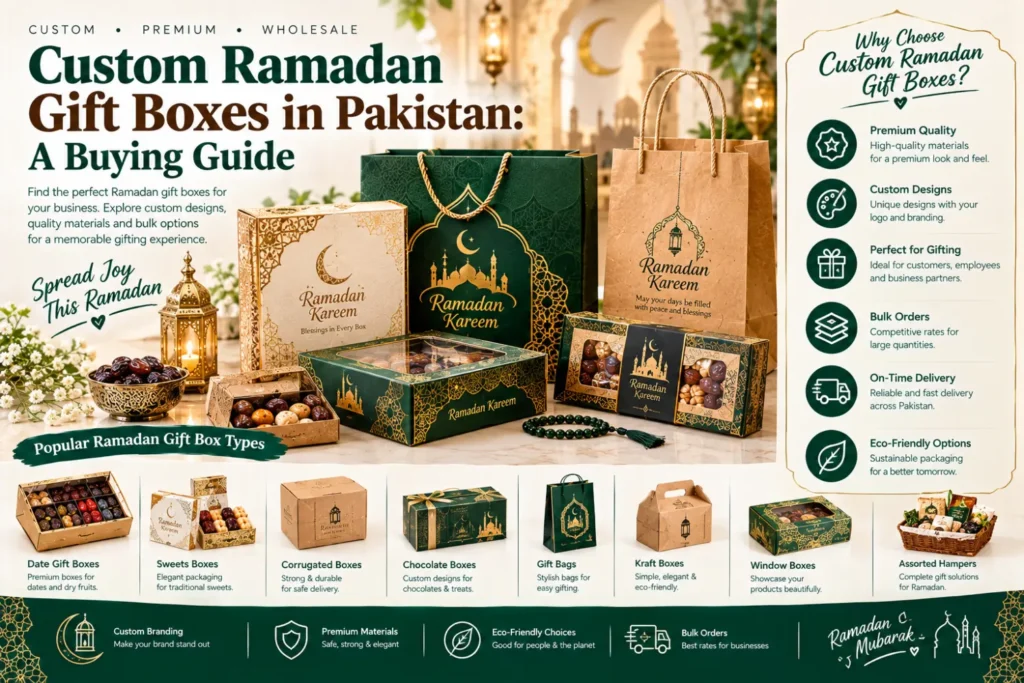
Custom Ramadan Gift Boxes in Pakistan: A Buying Guide
October 5, 2026
No Comments
A Ramadan gift box is only as good as the box itself. The contents matter,
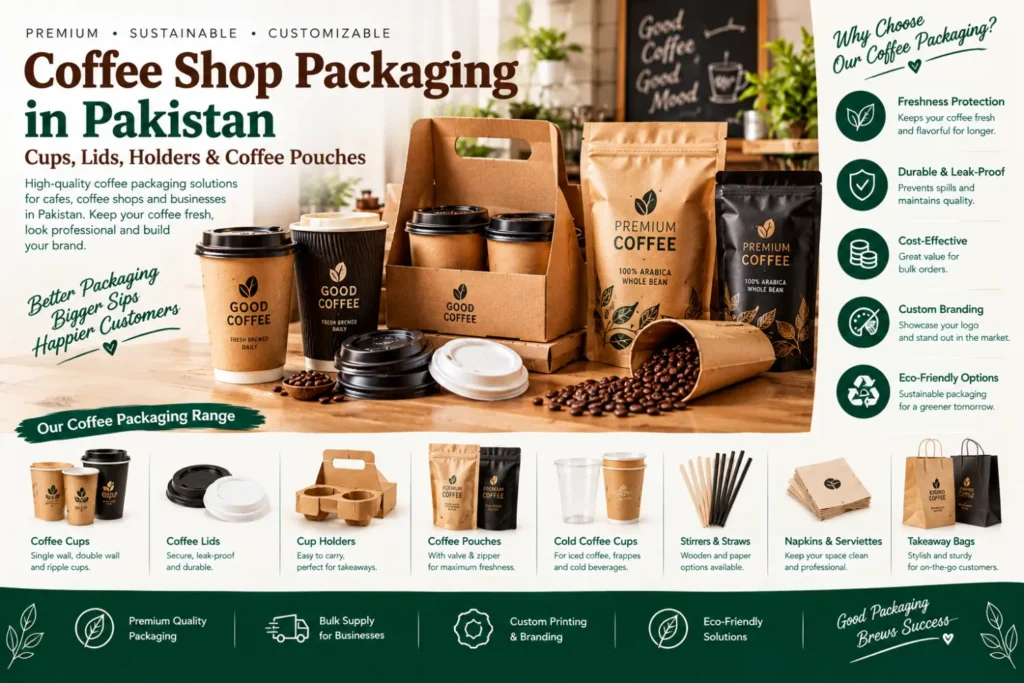
Coffee Shop Packaging in Pakistan: Cups, Lids, Holders & Coffee Pouches
October 4, 2026
No Comments
A coffee shop needs two very different kinds of packaging. One for drinks served to
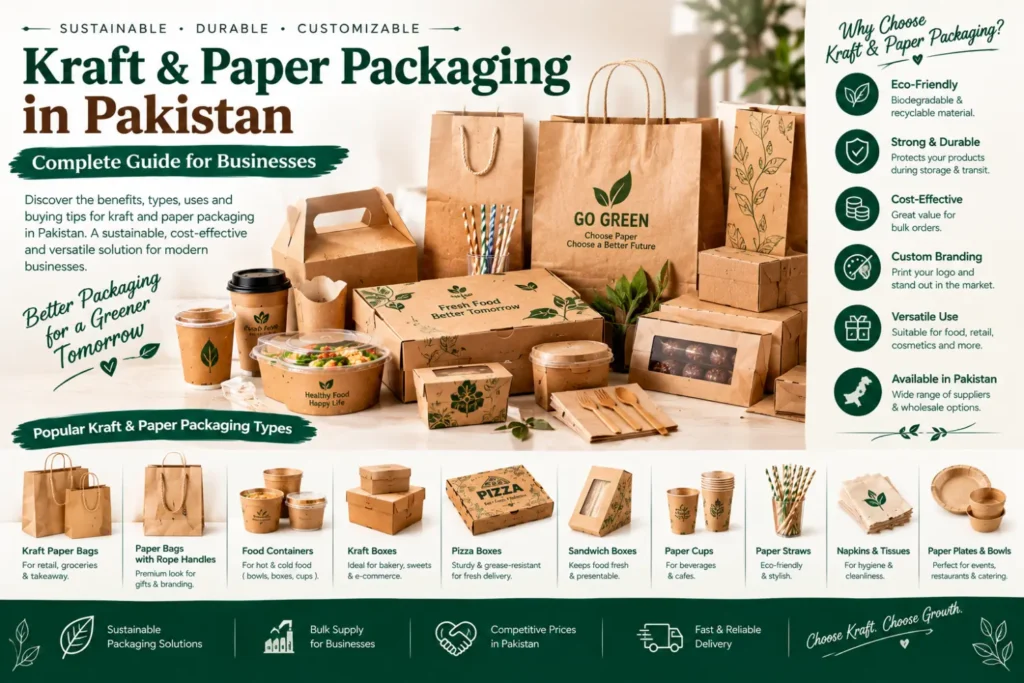
Kraft & Paper Packaging in Pakistan: Complete Guide for Businesses
October 3, 2026
No Comments
Kraft and paper packaging covers more ground than most businesses realize. Boxes. Bags. Trays. Wraps.
FEEL FREE CONTACT US
info@packaigngmaster.pk
923153127889
Packaging Master, serving Pakistan since 2020, specializes in premium disposable packaging boxes, food packaging, e-commerce cartons, kraft items, and fully customized solutions. Trusted by restaurants, SMEs, retail stores, and online sellers, we deliver durable, eco-friendly packaging with fast nationwide delivery and competitive pricing—making us a leading choice for reliable, high-quality packaging in Pakistan.
Company
Products
Contact Detail
- Rafi Group Landmark Plaza LG 60,61 Jail Road, Lahore
- Phone: +923153127889
- Email: info@packagingmaster.pk
© 2026 Packaging Master. All Rights Reserved.