For orders up to 3k, a 50% advance payment is required for order confirmation.

For orders up to 3k, a 50% advance payment is required for order confirmation.
Within Lahore PKR 250–600 (area-wise) | Out of Lahore PKR 400 (0–3 kg) | Above 3 kg +PKR 130/kg
Paper Straws in Pakistan: Eco-Friendly Alternative to Plastic Straws
- Hamza
- No Comments
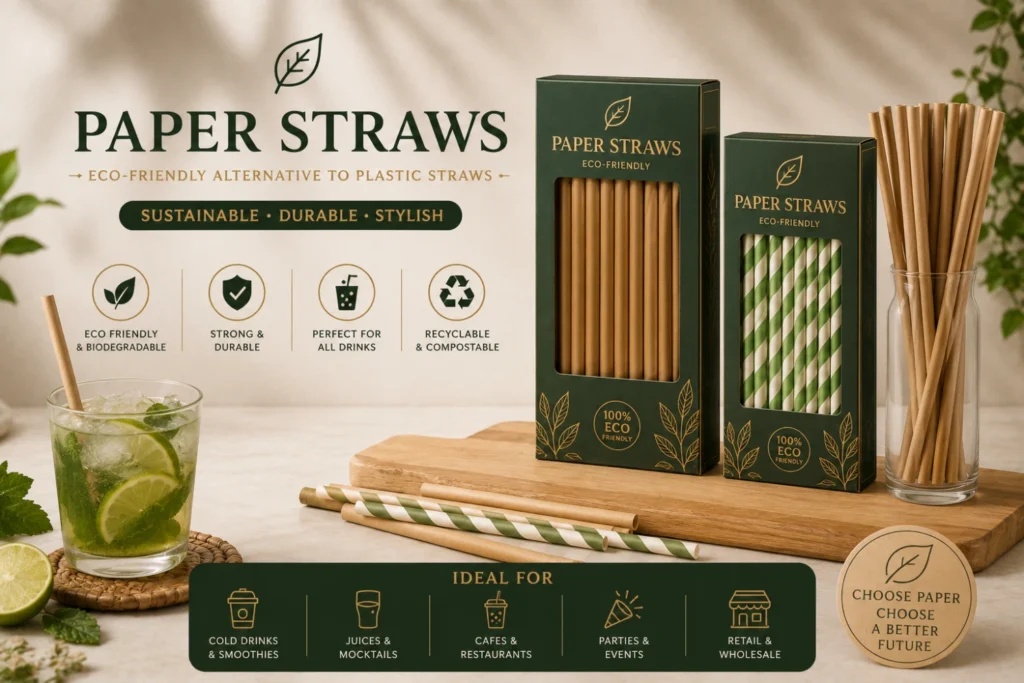
Paper straws are the leading eco-friendly replacement for plastic straws in Pakistan, made from food-grade, FSC-certified paper that biodegrades naturally instead of persisting in landfills and waterways for centuries, and they’re increasingly a compliance requirement rather than just a sustainability choice for cafés and restaurants.
Pakistan’s Islamabad Capital Territory has had drinking straws on its list of prohibited single-use plastics since the Single-Use Plastics (Prohibition) Regulations, 2023, and Punjab’s Environment Protection Agency has been running active enforcement drives, with over 400,000kg of banned plastic confiscated in 2025 alone and even higher volumes seized in the first months of 2026. For restaurant owners, café chains, and beverage brands, that means paper straws have moved from a “nice-to-have” green touch to a practical necessity — both to stay ahead of enforcement and to meet the expectations of a customer base that increasingly notices and shares eco-friendly packaging choices online.
Why Businesses Are Switching to Paper Straws
- Regulatory pressure is real and growing. Beyond Islamabad’s dedicated regulation, provinces including Punjab and Sindh have been tightening enforcement of broader single-use plastic bans that include straws, with fines and confiscations reported through 2025 and 2026.
- Customer perception matters. Diners increasingly associate visible plastic straws with a brand that hasn’t updated its practices, while paper straws signal a business paying attention to sustainability.
- They’re now genuinely usable. Early paper straws had a reputation for going soggy fast; current food-grade paper straw manufacturing (multi-ply paper, proper sealing) has largely fixed this for typical serving times.
What to Know Before Switching
Material and certification Look for paper straws made from certified food-grade paper — ideally FSC-certified, meaning the paper pulp comes from responsibly managed sources. This matters both for food safety (no ink bleed or chemical odor into the drink) and for genuine environmental credibility, since not every “eco” straw on the market is actually certified.
Sizes for different drinks Paper straws commonly come in a few standard lengths and diameters:
- Standard/narrow – for soft drinks, iced tea, water service
- Wide/jumbo – for smoothies, milkshakes, and bubble tea where thicker liquids or toppings need a wider bore
- Cocktail/short – for small glasses, mocktails, or garnish-style service
Matching straw diameter to your drink menu avoids the common complaint of straws being too narrow for thicker beverages.
Wrapped vs. unwrapped Individually wrapped paper straws cost more per unit but are the standard for hygiene-conscious dine-in and delivery service, especially post-COVID customer expectations. Unwrapped bulk straws work for high-volume, low-cost operations like events or self-service stations.
How long they hold up Quality paper straws are built to last through a typical drink-serving window (roughly 30–60 minutes) without collapsing, which is enough for the vast majority of dine-in and takeaway occasions. They are not designed for all-day reuse, and businesses should set expectations accordingly rather than treating them as a drop-in replacement for durability, not just material.
Paper Straws vs. Other Plastic Alternatives
| Option | Best for | Trade-off |
| Paper straws | General dine-in/takeaway, regulatory compliance | Can soften in very long-serving drinks |
| PLA (bioplastic) straws | Cold drinks needing extra rigidity | Higher cost, requires industrial composting |
| Bamboo/reusable straws | Home use, eco-conscious retail add-ons | Not practical for high-volume disposable service |
For most restaurants, cafés, and juice bars in Pakistan, paper straws remain the most practical and cost-effective plastic alternative at scale.
Sourcing Paper Straws in Pakistan: What to Check
- Certification documentation – Ask suppliers directly for FSC or food-grade certification rather than assuming based on marketing language.
- Consistent sealing quality – Poorly sealed straws unravel or leak paper fibers into drinks; ask for samples before a bulk order.
- MOQ and packaging format – Wholesale suppliers typically sell in bulk cases; confirm whether wrapped or unwrapped format fits your service style and storage.
- Color and branding options – Many suppliers offer printed or colored paper straws, useful for brand consistency once volume justifies the added cost.
FAQs
Are paper straws mandatory in Pakistan?
Plastic drinking straws are specifically listed under Islamabad’s Single-Use Plastics (Prohibition) Regulations, 2023, and provinces including Punjab have been actively enforcing broader single-use plastic restrictions. Requirements vary by region, so businesses should confirm current local rules for their specific city.
Do paper straws get soggy quickly?
Quality food-grade paper straws are designed to hold up for the typical length of time a drink is consumed, generally 30–60 minutes, without falling apart. Lower-quality or single-ply straws are more prone to sogginess, which is why sourcing from a certified supplier matters.
What size paper straw should I use for bubble tea?
Bubble tea needs a wide/jumbo paper straw, since tapioca pearls require a bore diameter of roughly 12mm or more. Standard narrow straws used for soft drinks are not suitable for boba service. Pairing it with a properly sized disposable injection glass matters just as much as the straw — see our full guide to injection glasses for bubble tea shops for size and lid recommendations.
Are paper straws more expensive than plastic straws?
Paper straws typically cost more per unit than plastic straws, though the gap has narrowed as demand has grown. For many businesses, the cost difference is offset by regulatory compliance and improved customer perception.
Can paper straws be composted?
Certified food-grade paper straws are generally biodegradable and can break down significantly faster than plastic under proper waste conditions, though actual composting outcomes depend on local waste management infrastructure.
Related Posts:
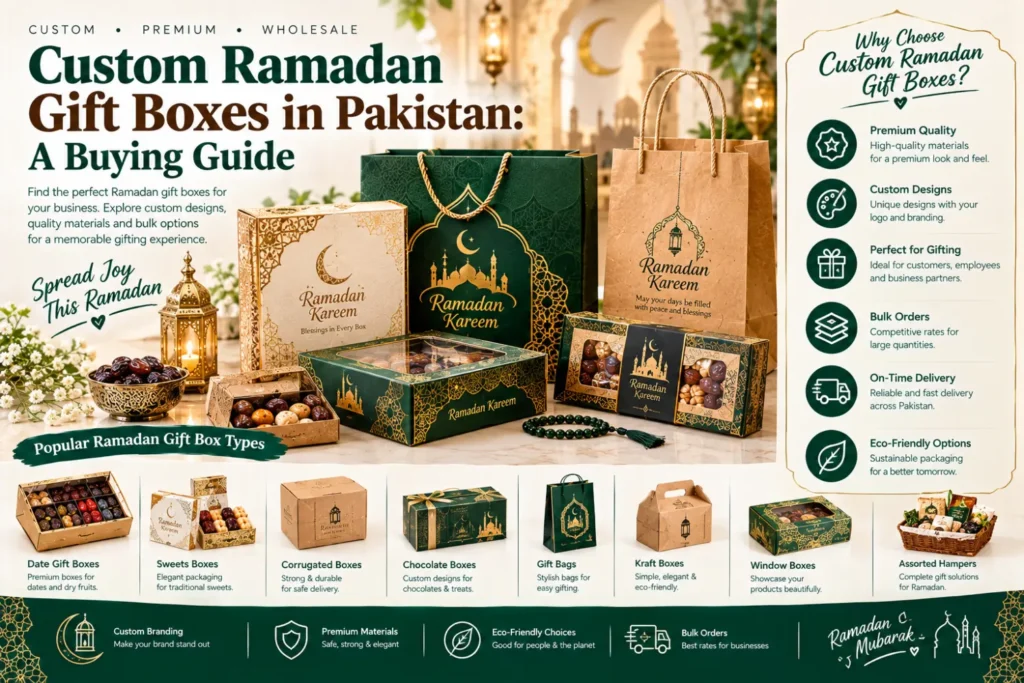
Custom Ramadan Gift Boxes in Pakistan: A Buying Guide
October 5, 2026
No Comments
A Ramadan gift box is only as good as the box itself. The contents matter,
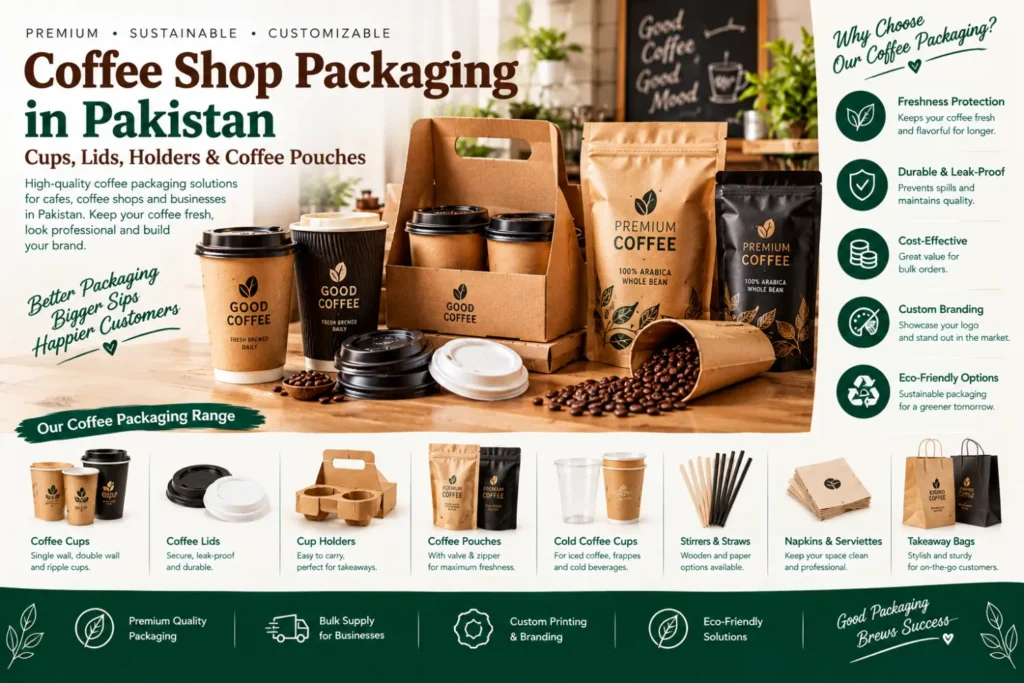
Coffee Shop Packaging in Pakistan: Cups, Lids, Holders & Coffee Pouches
October 4, 2026
No Comments
A coffee shop needs two very different kinds of packaging. One for drinks served to
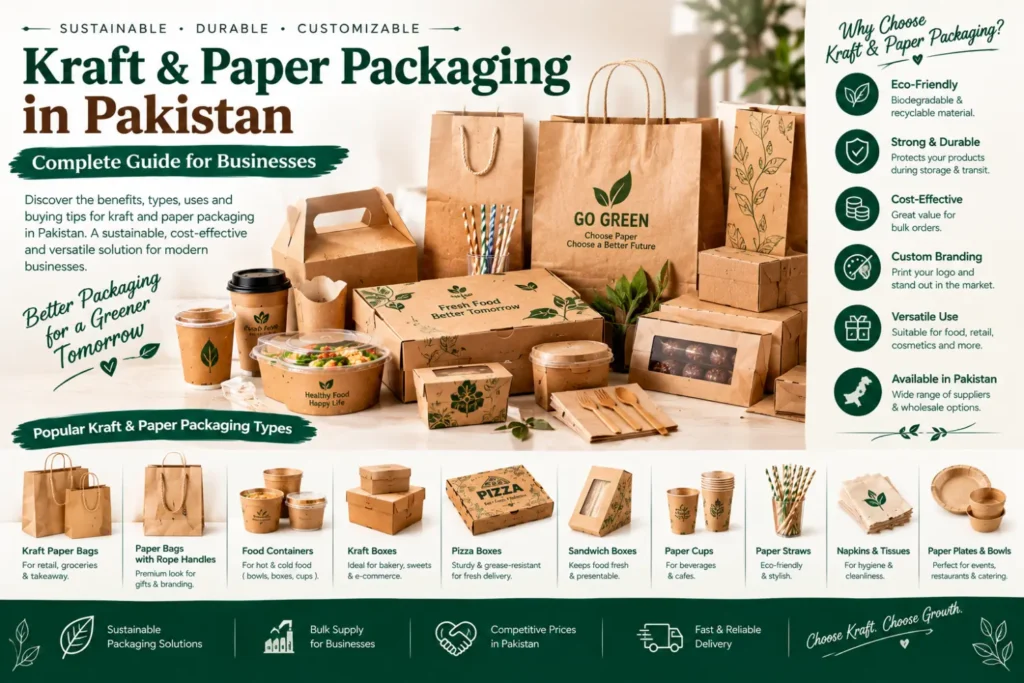
Kraft & Paper Packaging in Pakistan: Complete Guide for Businesses
October 3, 2026
No Comments
Kraft and paper packaging covers more ground than most businesses realize. Boxes. Bags. Trays. Wraps.
FEEL FREE CONTACT US
info@packaigngmaster.pk
923153127889
Packaging Master, serving Pakistan since 2020, specializes in premium disposable packaging boxes, food packaging, e-commerce cartons, kraft items, and fully customized solutions. Trusted by restaurants, SMEs, retail stores, and online sellers, we deliver durable, eco-friendly packaging with fast nationwide delivery and competitive pricing—making us a leading choice for reliable, high-quality packaging in Pakistan.
Company
Products
Contact Detail
- Rafi Group Landmark Plaza LG 60,61 Jail Road, Lahore
- Phone: +923153127889
- Email: info@packagingmaster.pk
© 2026 Packaging Master. All Rights Reserved.